
What Is 5 Dog Years in Human Years? Answer by Size, Breed & Method
Quick Answer — 5 Dog Years in Human Years
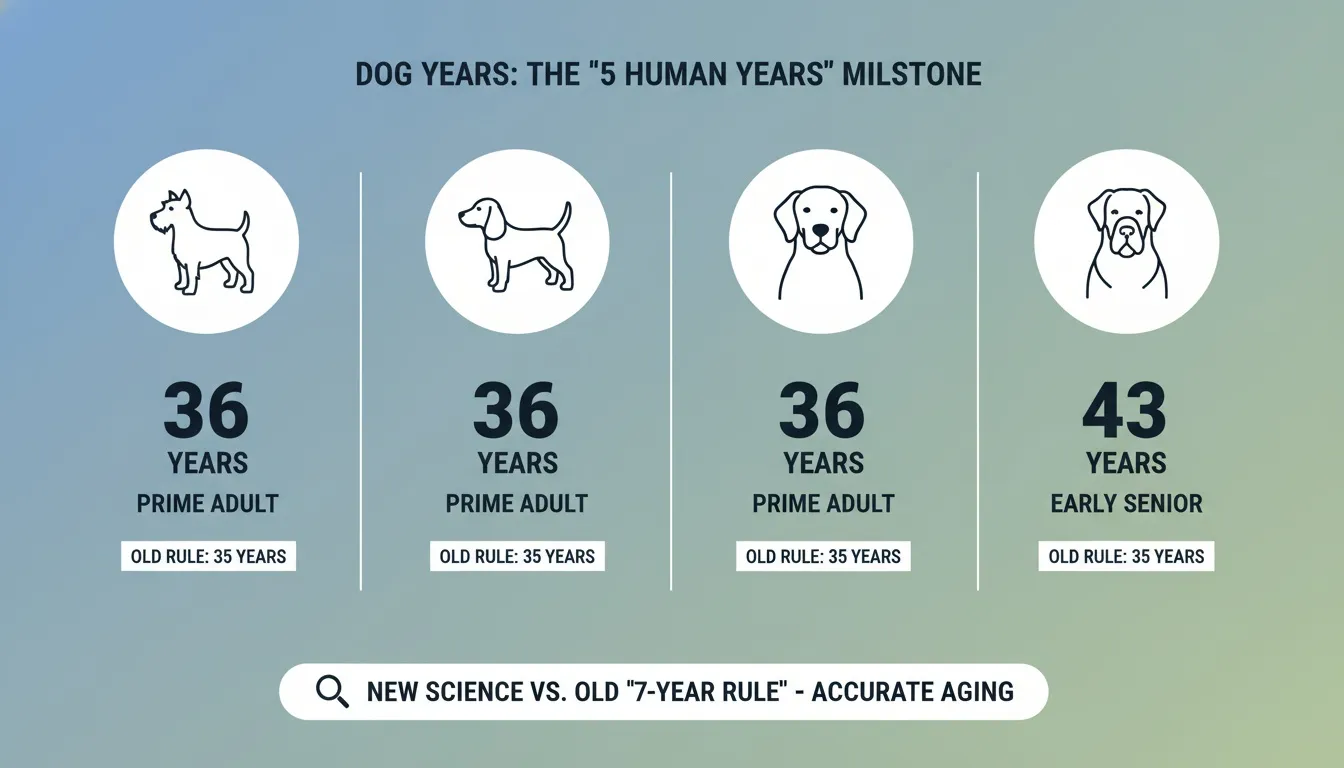
A 5-year-old dog is roughly equivalent to 36 human years for many small, medium, and large dogs, while giant breeds may be closer to 43 human years. The exact equivalent depends on your dog’s size, breed, and the aging method used.
Small dog (under 10 kg): ~36 human years
Medium dog (10–25 kg): ~36 human years
Large dog (25–45 kg): ~36 human years
Giant dog (45+ kg): ~43 human years
For a more personalized estimate, use the free dog age calculator to check your dog’s human-equivalent age.
Why Is 1 Dog Year Equal to 15 Human Years?
Method 1 — AVMA Standard Formula (Most Used)
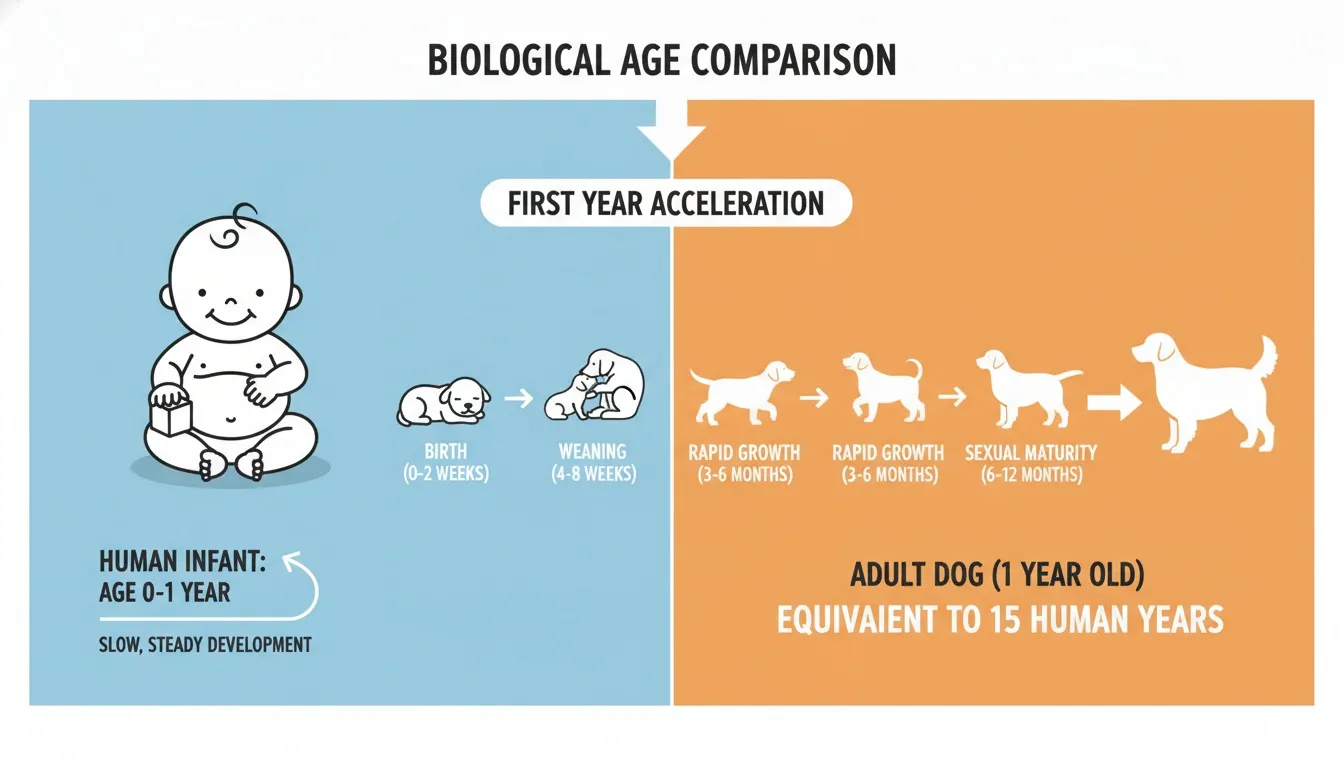
The American Veterinary Medical Association (AVMA) suggests a widely accepted calculation method to better reflect how dogs mature. Instead of a simple multiplier, this formula accounts for the rapid development dogs experience during their first two years of life.
The math breaks down like this:
Year 1 = 15 human years
Year 2 = 9 human years
Years 3, 4, and 5 = 4 human years each
When you add these up (15 + 9 + 4 + 4 + 4), you find that 5 dog years equals 36 human years. This is the standard baseline many veterinarians use to estimate your dog’s physiological life stage.
Method 2 — AKC Size-Based Chart (Breed Specific)
The American Kennel Club emphasizes that breed size plays a massive role in aging. Smaller dogs typically enjoy longer lifespans and reach maturity differently than giant breeds, meaning your dog’s size at age 5 changes their “human age” equivalent.
Small/Medium Breeds: Generally around 36 human years.
Large Breeds: Often equivalent to 36 human years.
Giant Breeds: These dogs age faster, reaching approximately 43 human years by age 5.
Keep in mind that giant breeds like Great Danes or Mastiffs often have shorter life expectancies, which is why they appear older physiologically much sooner than a Toy Poodle of the same age.
Method 3 — DNA Epigenetic Clock (Most Scientific)
In 2020, researchers at UC San Diego published a groundbreaking study in Cell Systems that looked at “epigenetic clocks.” This method uses DNA methylation to track biological age rather than just calendar years.
Using the formula 16×ln(5)+31, a 5-year-old dog aligns with approximately 56.8 human years. It is important to note that this specific study focused on Labrador Retrievers. While it is the most scientifically precise look at cellular aging, it hasn’t been fully confirmed across every single dog breed yet.
Why the Old “1 Dog Year = 7 Human Years” Rule Is Wrong
The classic “7-year rule” is a myth that simply doesn’t hold up under veterinary scrutiny. It suggests a 5-year-old dog is 35, which is close to the AVMA standard, but the logic behind it is fundamentally flawed.
Rapid Maturation: Dogs experience their most significant developmental growth in their first two years, effectively hitting “human teen” status by the end of year one.
Size Blindness: This rule treats a Chihuahua the same as an Irish Wolfhound, ignoring the massive biological differences in how these dogs age.
Inaccuracy: Because it relies on a fixed multiplier, it fails to capture the physiological reality that dogs age quickly early on and then slow down as they reach adulthood.
| Method | 5 Dog Years = | Accuracy |
|---|---|---|
| 7x Rule (outdated) | 35 years | ❌ Wrong |
| AVMA Formula | 36 years | ✅ Standard |
| AKC Size Chart | 36–43 years | ✅ Best for breeds |
| DNA Epigenetic | ~57 years | ✅ Most scientific |
5 Dog Years in Human Years — By Size & Breed
Size Conversion Table
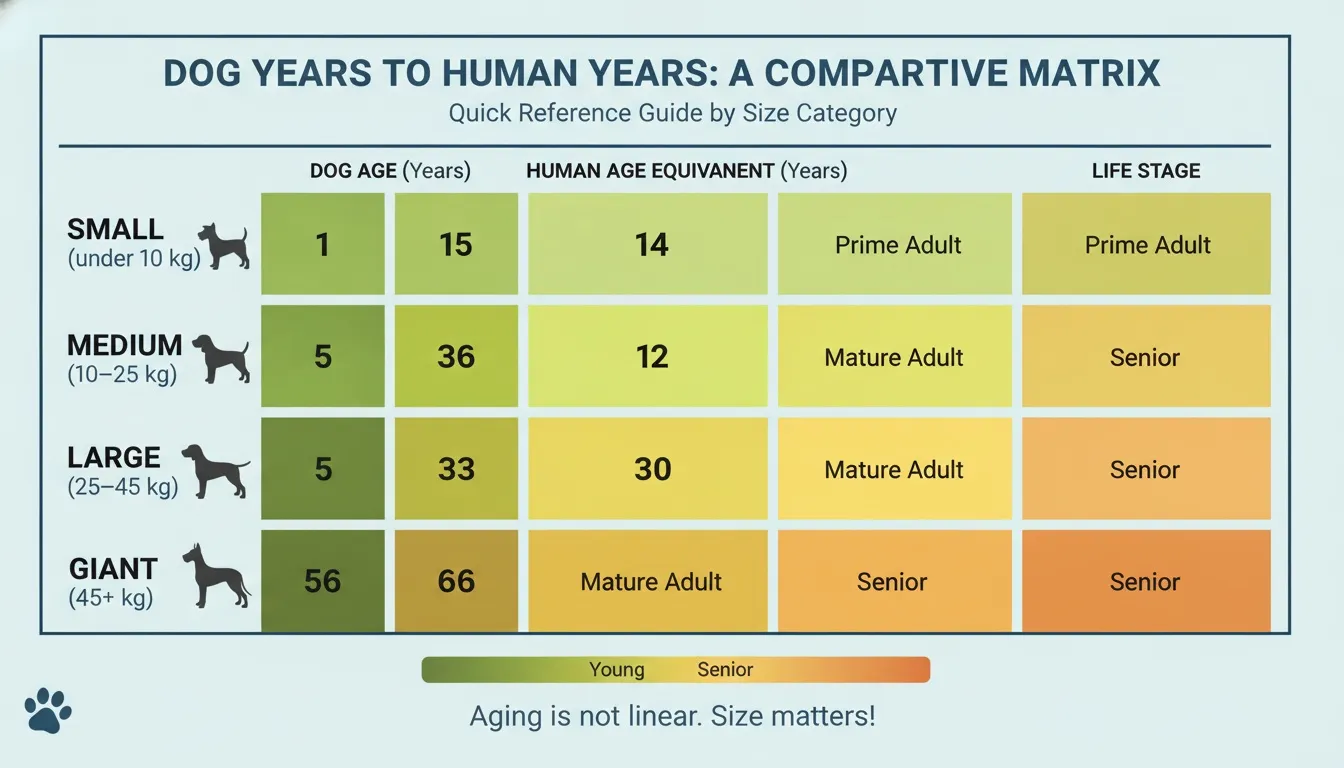
Understanding how size influences your dog’s aging process is key to providing the right care. According to AKC guidelines, smaller breeds typically have longer lifespans, while giant breeds experience accelerated biological aging. At 5 years old, here is how different size categories translate into human years:
| Dog Size | Weight | 5 Dog Years = | Life Stage |
|---|---|---|---|
| Small | Under 10 kg | 36 years | Prime Adult |
| Medium | 10–25 kg | 36 years | Prime Adult |
| Large | 25–45 kg | 36 years | Mature Adult |
| Giant | 45+ kg | 43 years | Early Senior |
Popular Breeds at Age 5
Regardless of your dog’s specific breed, reaching the 5-year mark signifies they are firmly in their adult years. While their human-equivalent age may vary, their nutritional and exercise needs remain high during this prime phase of life.
| Breed | Size | Human Age Equivalent | Stage |
|---|---|---|---|
| Chihuahua | Small | 36 years | Young adult |
| Pomeranian | Small | 36 years | Young adult |
| Beagle | Medium | 36 years | Prime adult |
| Labrador Retriever | Large | 36 years | Mature adult |
| German Shepherd | Large | 36 years | Mature adult |
| Golden Retriever | Large | 36 years | Mature adult |
| Great Dane | Giant | 43 years | Early senior |
| Mastiff | Giant | 43 years | Early senior |
What About Mixed Breed or Unknown Breed Dogs?
If you share your home with a rescue or a “super-mutt,” estimating their age can feel like a guessing game. Generally, mixed-breed dogs benefit from higher genetic diversity, which can often result in a slightly slower aging process compared to purebreds with narrower gene pools.
If you aren’t sure about your dog’s specific genetic makeup, the best approach is to estimate based on their weight. Use the medium-sized category as your baseline for general wellness check-ins. Monitoring their activity levels and weight is more important than an exact age calculation.
What Life Stage Is a 5-Year-Old Dog?
Small & Medium Dogs at 5 — Prime Adult
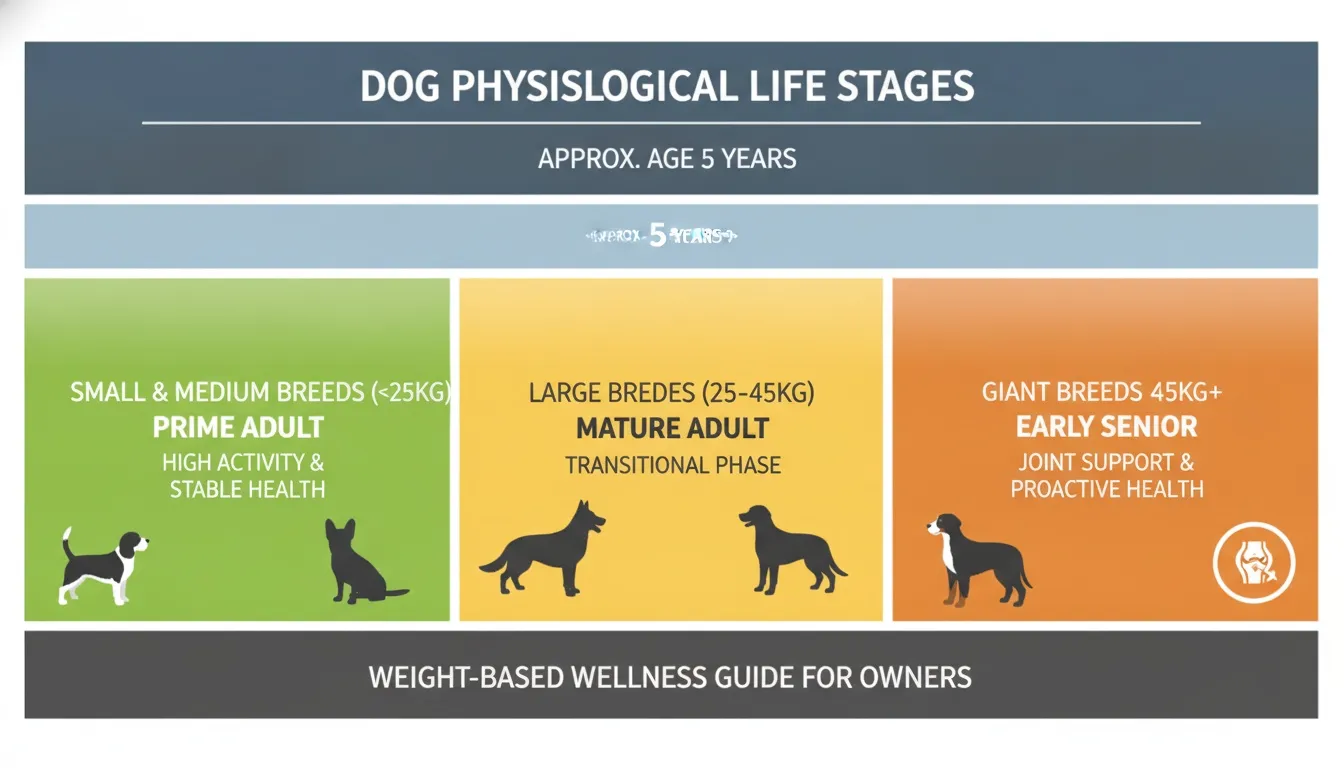
At age 5, small and medium breeds are typically in their absolute prime. You likely notice your dog at peak physical condition, boasting plenty of energy, a healthy coat, and strong teeth.
Baseline Health: This is the perfect age to establish a baseline blood panel with your veterinarian to track your dog’s long-term health trends.
Preventative Care: AAHA guidelines suggest regular dental care is vital now, as this is when plaque and tartar often lead to more serious periodontal issues.
Active Lifestyle: These dogs have the stamina for long hikes and intense play, making this the best time to keep them highly active.
Large Dogs at 5 — Mature Adult (Transition Phase)
Large breeds begin a subtle transition into their mature adult phase around age 5. You might not see it on the surface, but your dog’s joints may start showing the first signs of wear after years of carrying a larger frame.
Joint Screening: If you own a Labrador, German Shepherd, or Golden Retriever, veterinarians recommend discussing hip and elbow screenings to catch early arthritis.
Weight Control: Maintaining an ideal body condition score is critical; even a few extra pounds put unnecessary stress on your dog’s aging joints.
Routine Exams: While they seem healthy, stick to strict annual vet checkups to ensure any age-related shifts are addressed before they become chronic problems.
Giant Dogs at 5 — Early Senior Stage
Giant breeds like Great Danes, Mastiffs, and St. Bernards have a much faster internal clock. By age 5, these gentle giants are often already entering their early senior years, requiring a shift in your care routine.
Increased Frequency: Veterinarians recommend wellness exams every six months for giant breeds at this stage to monitor their health closely.
Critical Monitoring: Keep a watchful eye on heart health and watch for any signs of bloat, which is a significant health concern for deep-chested breeds.
Activity Adjustment: Transition to low-impact exercise to protect those precious joints and prevent excessive fatigue during your daily walks.
How to Care for a 5-Year-Old Dog — Vet-Approved Guide
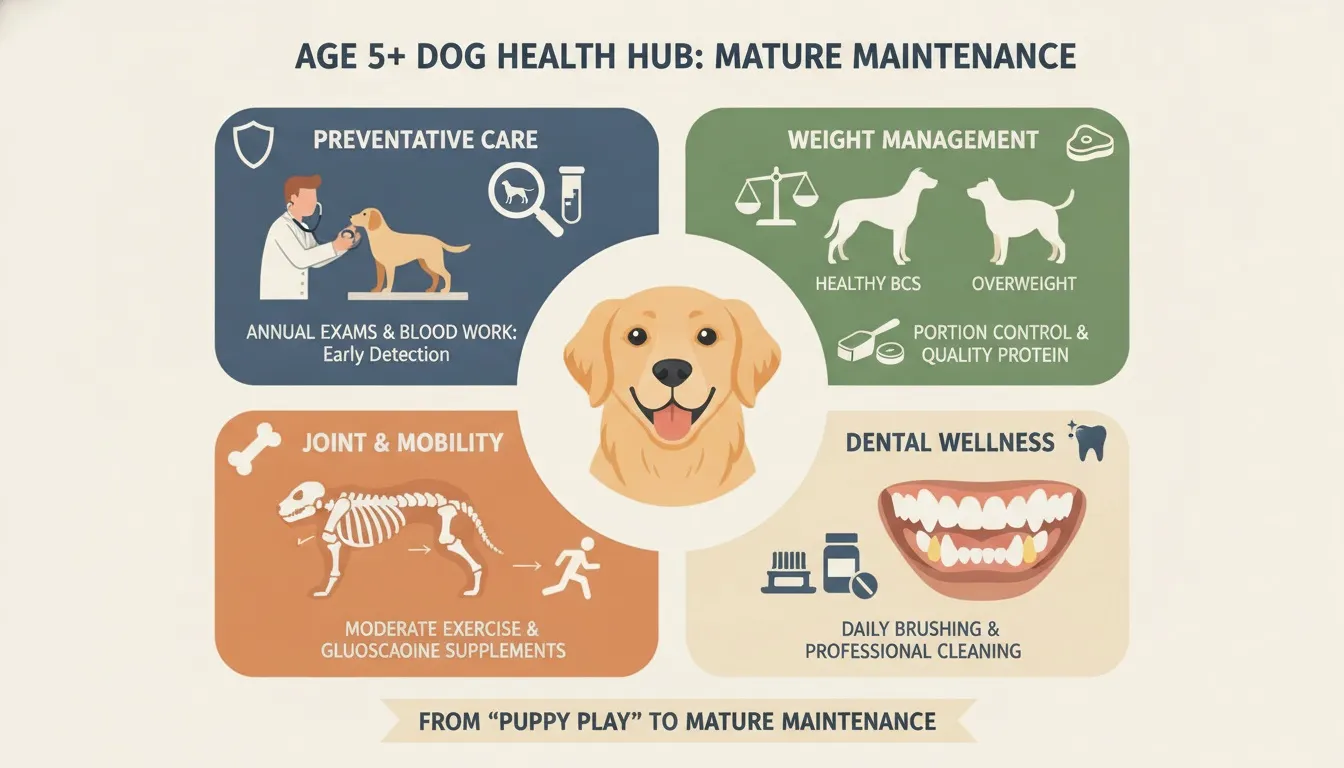
Diet & Nutrition at Age 5
At this stage of your dog’s life, it is time to transition completely to high-quality adult maintenance food. Puppy formulas are far too calorie-dense for a 5-year-old dog and can contribute to unwanted weight gain.
Obesity is the number one health risk for dogs in their prime years, so keep a close eye on your dog’s waistline. If you have a large or giant breed, talk to your veterinarian about adding joint support supplements like glucosamine and omega-3 fatty acids, as wear and tear often begin to show now. For most small and medium breeds, you generally don’t need to switch to “senior” formulas just yet, as they are still in their prime adult years.
Exercise Guide by Size
Your dog’s activity needs will shift slightly as they mature. For small and medium breeds, aim for 30–60 minutes of daily activity, but remember that mental games are just as important as physical movement to keep them sharp.
Large breeds do best with moderate, consistent exercise; try to avoid high-impact jumping or repetitive motion on hard surfaces that could stress their joints. If you have a giant breed, low-impact exercise like swimming is the absolute best way to maintain muscle tone without risking injury. Above all, focus on consistency rather than high-intensity bursts of activity to keep your dog healthy and happy.
Vet Visits & Health Screenings at Age 5
The American Animal Hospital Association (AAHA) recommends annual wellness exams for adult dogs, and at age 5, these visits become critical for preventative care. Ask your vet to perform a full blood panel during your next appointment; this serves as a baseline to track your dog’s health trends over time.
If your dog has visible tartar or persistent bad breath, schedule a professional dental cleaning, as dental disease often worsens significantly by this age. Never skip their monthly heartworm, flea, and tick prevention, even if they stay mostly indoors. For more guidance on managing these costs and care routines, GoodRx Pet Health offers excellent vet-reviewed resources for pet owners.
Warning Signs at Age 5 — Don’t Ignore
Catching health issues early is the best way to extend your dog’s life. Pay attention if you notice joint stiffness, especially after your dog has been lying down for a while. Increased thirst or frequent urination should always be discussed with your vet, as these can be early indicators of kidney issues or diabetes.
Keep an eye out for these subtle changes:
Unexplained weight gain despite maintaining the same diet.
Persistent bad breath, which often signals underlying periodontal disease.
New lumps or bumps during grooming, which should be checked immediately, particularly in breeds like Golden Retrievers.
Frequently Asked Questions
No, your dog is certainly not "old" at this stage. For small and medium breeds, 5 years is firmly in the prime adult phase, equivalent to about 36 human years. However, giant breeds reach their early senior years by age 5, requiring more proactive health monitoring as they begin to age faster.
A 5-year-old Labrador is approximately 36 human years old, placing them in the mature adult life stage. Because Labradors are prone to joint issues, AAHA and other veterinary experts often recommend specialized hip and elbow screenings around this age to catch early signs of mobility concerns.
That 35-year figure comes from the outdated 7-year rule, which is considered inaccurate today. According to AVMA standards, a 5-year-old dog is actually 36 human years old for most breeds. For giant breeds, that number jumps to 43 years, reflecting their significantly faster physiological aging process.
For a Great Dane, 5 dog years is equivalent to approximately 43 human years. Due to their massive size, these dogs experience accelerated biological aging compared to smaller breeds, meaning they transition into their early senior life stage much sooner than their canine counterparts of a smaller stature.
The most practical method is the size-based chart recommended by the AKC. If you are looking for pure scientific precision, the 2020 UC San Diego study introduced a DNA methylation "epigenetic clock" formula: $16 \times \ln(\text{age}) + 31$. This remains the gold standard for measuring biological age.
Senior status depends entirely on your dog's size and breed. Small breeds typically reach their senior years around 10–11 years, while medium breeds hit this stage at 8–9 years. Large breeds are usually considered seniors by age 7, and giant breeds often reach this milestone between 5 and 6 years old.
Gender has a minimal direct effect on how we calculate age equivalents. However, AVMA guidelines and broader veterinary observations suggest that spayed or neutered dogs tend to live slightly longer on average, often due to a reduced risk of certain reproductive diseases and lower roaming behaviors.
Five human years is roughly equivalent to 0.5 dog years, as your puppy is still in the earliest, most rapid stages of development. Our physiological aging charts start at the one-year mark, but you can use our free online calculator to get a more granular breakdown of your puppy's growth.
🐾 Other Age Guides
1 Comments
Leave a Comment Cancel reply

Gulfam Haider Mehdi
Founder & Developer
I built Dogagescalculator.com to give dog owners honest, science-backed answers instead of the outdated "×7" myth. Every figure here is checked against AKC, AVMA, and published veterinary research.
More about the author & this site →📌 Featured Guides
what is a border collie australian shepherd mix called
→
What Is the Lifespan of a Cocker Spaniel
→
pitbull dog years to human years
→
Mixed Breed Dog That Looks Like a Fox
→
What Is 1 Human Year In Dog Years
→
70 in dog years
→
Siberian Husky vs Alaskan Husky
→
19 years in dog years
→
Life Expectancy Of a West Highland White Terrier
→
pug years to human years
→
very good looking post