What Is 3 Dog Years in Human Years?
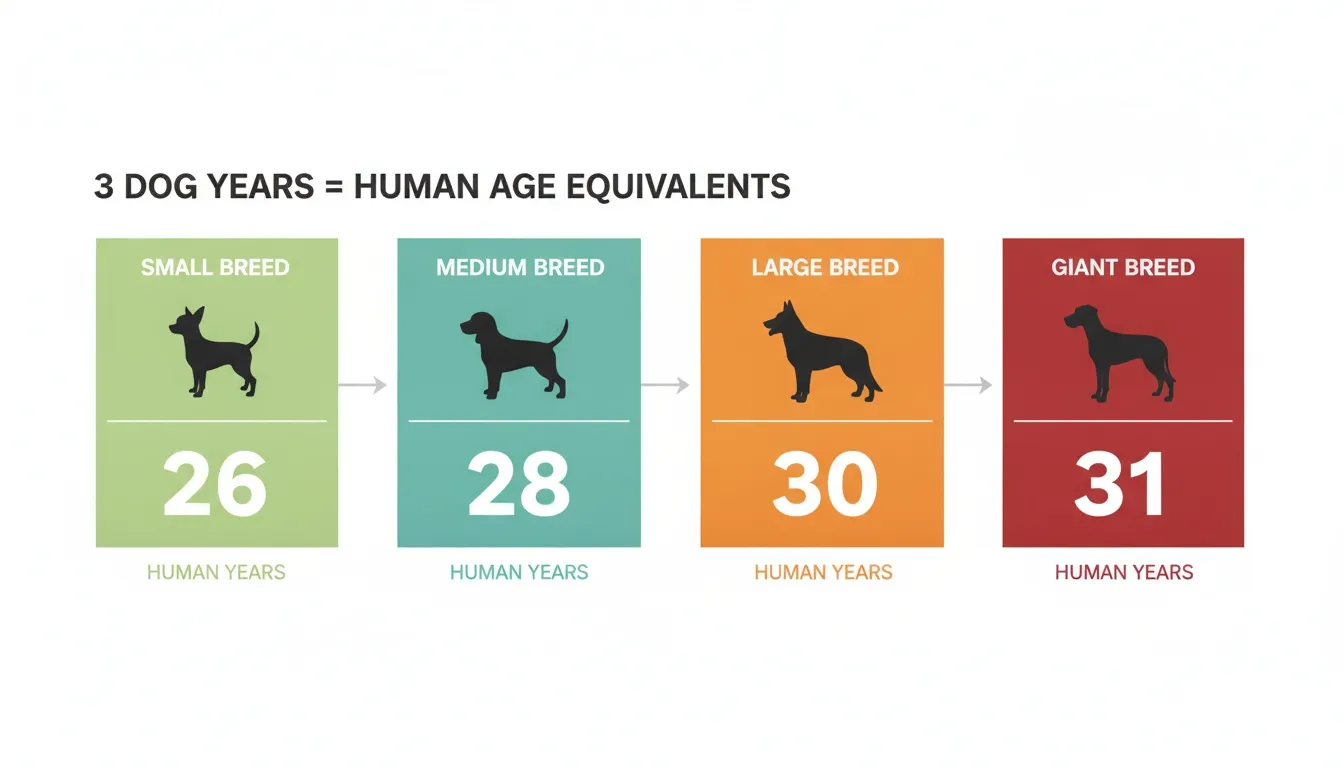
A 3-year-old dog is approximately 28 human years old if it is a medium-sized breed. The exact human-equivalent age varies by size, with small dogs generally aging more slowly and large or giant breeds aging faster as they mature. Unlike the old “multiply by seven” rule, modern dog-age estimates account for the different aging patterns of dogs by life stage and size.
Understanding Your Dog’s Age: Beyond the Myth
Why the “Multiply by 7” Rule Is Wrong
You might have grown up hearing that one year for a dog equals seven years for a human. It is a simple math trick, but it is scientifically inaccurate. Dogs reach sexual maturity much faster than humans, meaning they pack a lot of physical development into their first few years.
Following the AKC’s dog age guidelines, experts now recognize that aging happens in stages rather than a linear line. If you want to get a more precise estimate of your dog’s maturity level, you can use our free dog age calculator to see how their specific breed and size change the math.
What 3 Dog Years in Human Years Actually Means
When you look at 3 dog years in human years, you are essentially looking at a young adult who has moved past their high-energy puppy phase. At this age, most dogs are physically mature and have developed a more settled, predictable personality.
According to research regarding the epigenetic clock, such as the study published by PubMed, dogs undergo rapid physiological changes early in life that eventually level off. By the time your pup turns three, they have likely transitioned out of their “teenage” restlessness and into a prime state of health.
How Size Impacts Your Dog’s Aging
The most important factor in calculating 3 dog years in human years is your dog’s size. Large breeds reach their senior years much faster than small or toy breeds, meaning a 3-year-old Great Dane is closer to middle age than a 3-year-old Chihuahua.
This table shows the approximate human age equivalent for a 3-year-old dog based on their size:
| Dog Size | Human Age Equivalent (Approx.) |
| Small | 25 years |
| Medium | 28 years |
| Large | 30–32 years |
| Giant | 35+ years |
Understanding where your companion falls on this spectrum helps you better anticipate their unique health needs and energy levels. While your dog might be in the prime of their life, keeping an eye on their weight and activity is the best way to ensure they stay healthy for years to come.
3 Dog Years in Human Years — By Size
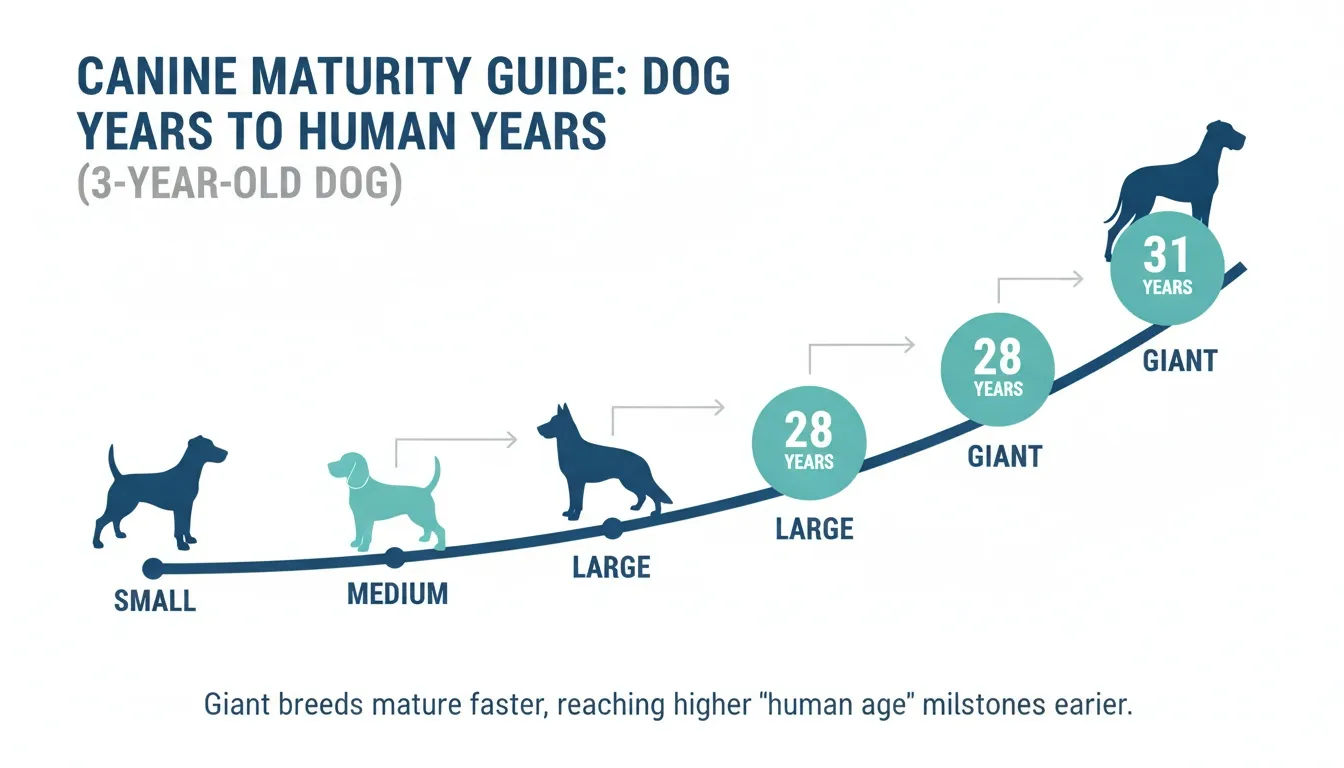
Finding your dog’s age isn’t one-size-fits-all because of how different breeds mature. According to AKC dog age guidelines, size is the biggest factor in how quickly your dog moves through their life stages.
The following table breaks down the human age equivalent for your 3-year-old dog based on their typical size categories.
| Dog Size | Weight Range | Human Age Equivalent | Life Stage |
|---|---|---|---|
| Small | Under 20 lbs | 26 years | Young Adult |
| Medium | 21–50 lbs | 28 years | Young Adult |
| Large | 51–100 lbs | 28 years | Young Adult |
| Giant | Over 100 lbs | 31 years | Adult |
Why Not 21? The Real Science Behind Dog Aging
The 7x Myth
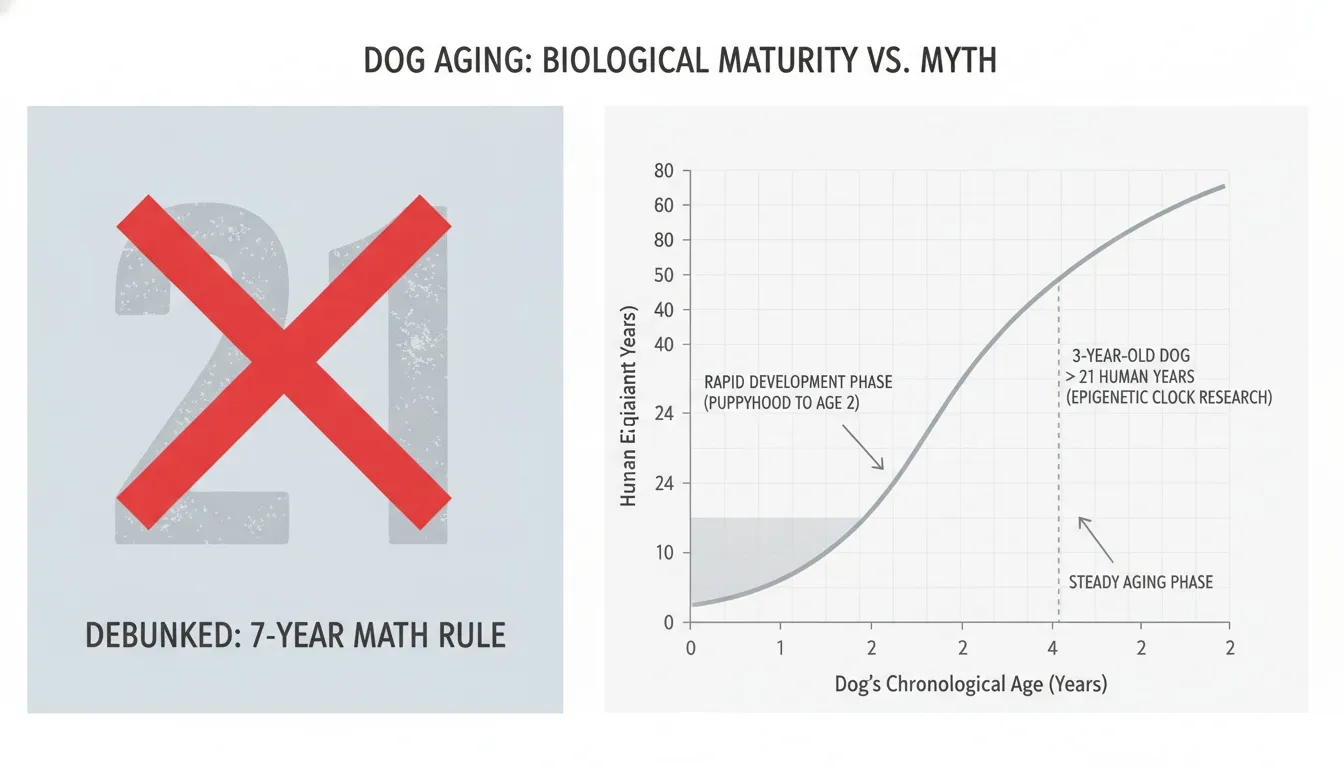
The old habit of multiplying your dog’s age by seven is actually a marketing myth from the 1950s, not a scientific fact. It suggests a linear growth that ignores how quickly puppies develop compared to humans.
AVMA Tiered Formula
Veterinarians now prefer a tiered model because it reflects the reality that dogs reach physical maturity much faster than us. By the time your pet turns three, they have already navigated their most intense growth phases.
The math breaks down like this for your 3-year-old dog:
Your dog’s first year equals 15 human years.
The second year adds 9 more, bringing the total to 24.
By the third year, your dog reaches 28 in human years.
This formula shows that your pet matures rapidly before their aging slows down to a more steady pace. Understanding these milestones helps you better support your companion as they transition out of their high-energy youth.
The Science of DNA Methylation
Modern research has moved beyond simple math to look at the biology inside your dog. Scientists are now observing the epigenetic clock, which measures how specific chemical markers on DNA change as a dog ages.
This research confirms that dogs age at different rates during various life stages. While the formula gives us a great baseline, your dog’s internal biological clock is a much more complex process than simple human years.
Why Did My Dog Jump 4 Human Years in Just One Year?
Decoding the 4-Year Leap
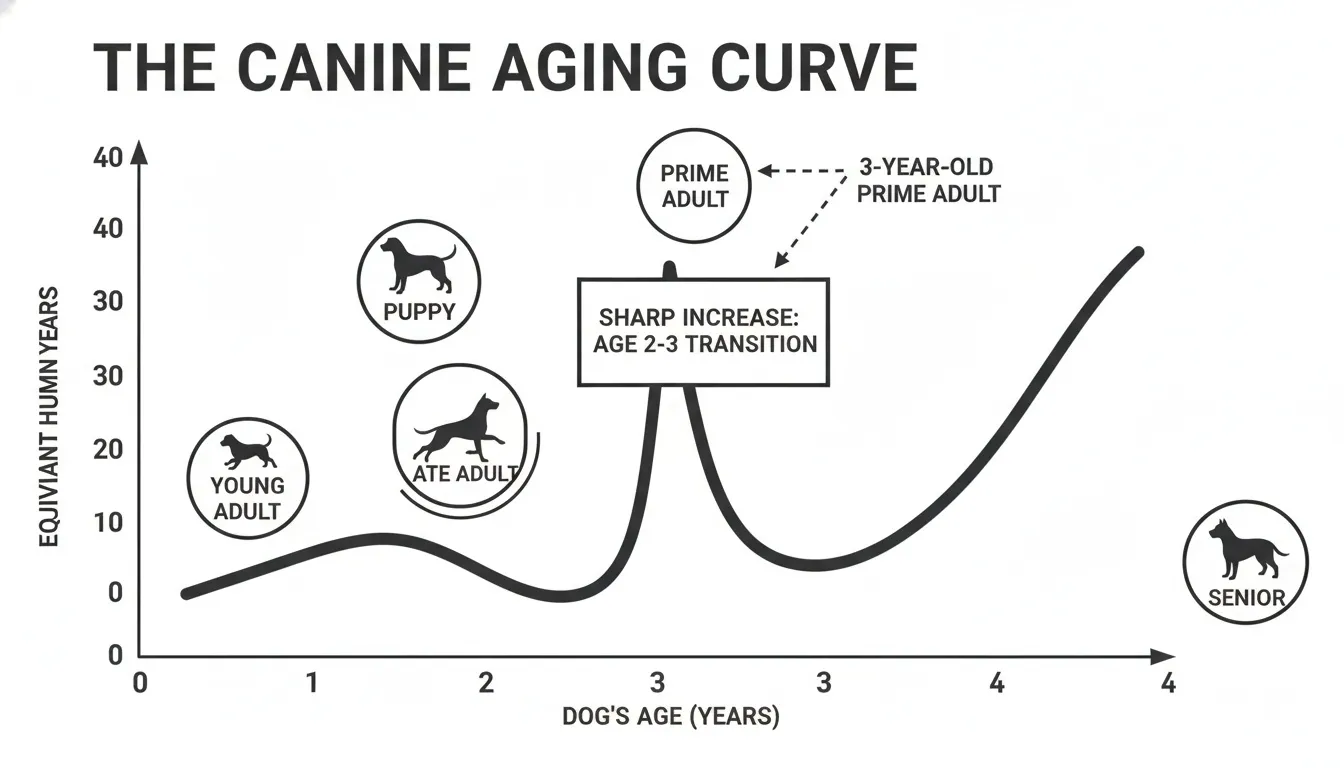
If you look at the math, your dog hits 24 in human years at age two and jumps to 28 by age three. This four-year leap happens because canine aging is not a smooth, straight line.
Once your dog passes that critical two-year mark, their rapid puppy development levels off significantly. From this point forward, most dogs settle into a consistent rhythm where each calendar year equals roughly four to five human years.
Your dog’s size also dictates how fast that biological clock ticks after their third birthday. Smaller breeds often maintain a slower, more gradual aging pace, while larger breeds begin to accelerate toward their senior years slightly faster.
The Progression by Size
This table illustrates how that four-year jump fits into your dog’s long-term journey based on their size:
| Dog Age | Small Breed | Medium Breed | Large Breed |
|---|---|---|---|
| 1 Year | 15 | 15 | 15 |
| 2 Years | 24 | 24 | 24 |
| 3 Years | 28 | 28 | 28 |
| 4 Years | 32 | 33 | 35 |
| 5 Years | 36 | 38 | 42 |
Seeing these numbers laid out shows that your 3-year-old dog is currently in a very stable, healthy window. While the math shifts as they get older, focusing on their current life stage helps you provide the right nutrition and exercise for their prime years.
What Life Stage Is a 3-Year-Old Dog In?
Life Stage by Size
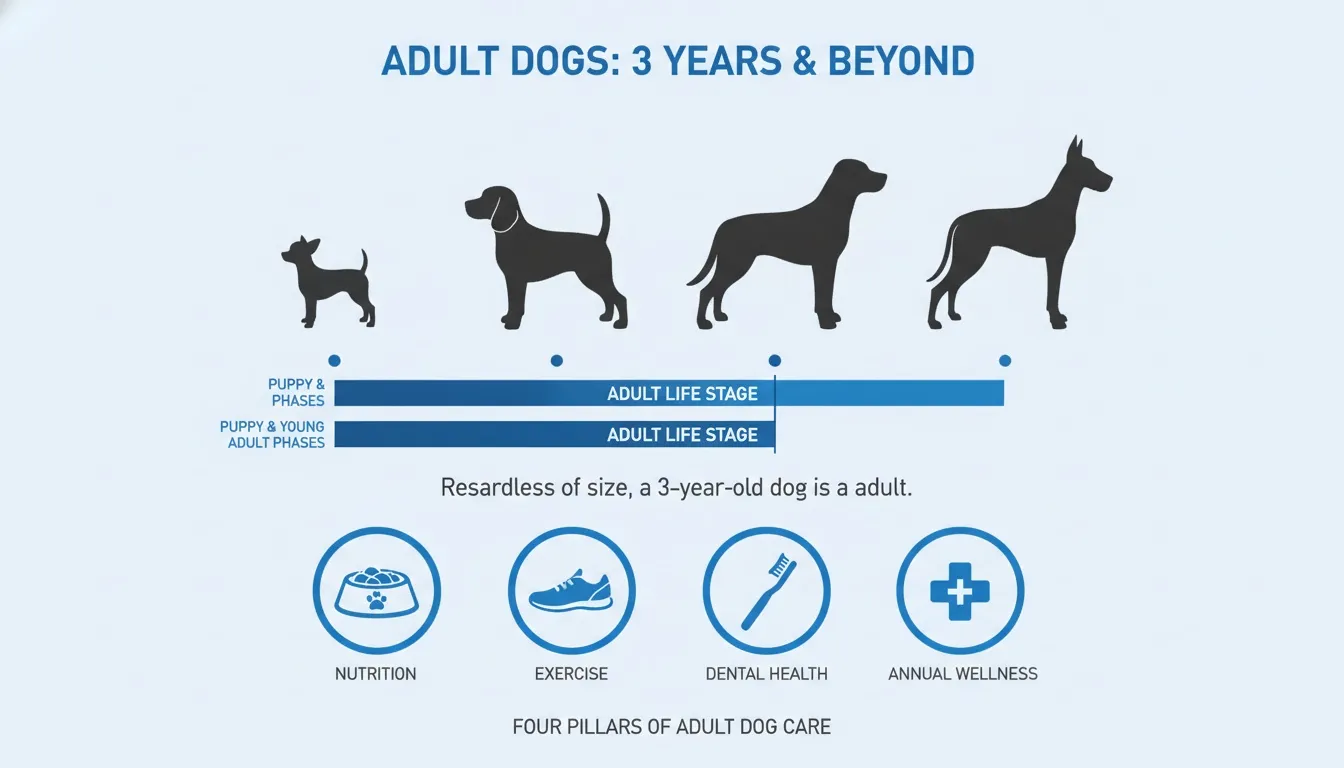
At three years old, your dog has officially graduated from the high-energy “teenage” years into a more stable life stage. According to the AAHA canine life stage guidelines, dogs are categorized by their physical and behavioral development rather than just their birth date.
Your dog’s specific stage depends on their breed size:
Small and medium breeds are considered young adults.
Large breeds have progressed into the adult category.
Giant breeds are typically classified as mature adults.
Physical and Mental State at 3 Years
By this point, your dog’s body is fully mature and their skeletal development is complete. You will likely notice that the constant, unpredictable energy of the puppy phase is gone, replaced by a consistent and reliable temperament.
This is often considered the peak of your dog’s physical health, where they are strong, coordinated, and ready for adventure. Their personality is now well-established, meaning you know exactly who your companion is and how they respond to the world around them.
3 Years Old in Popular Breeds — Human Age by Breed
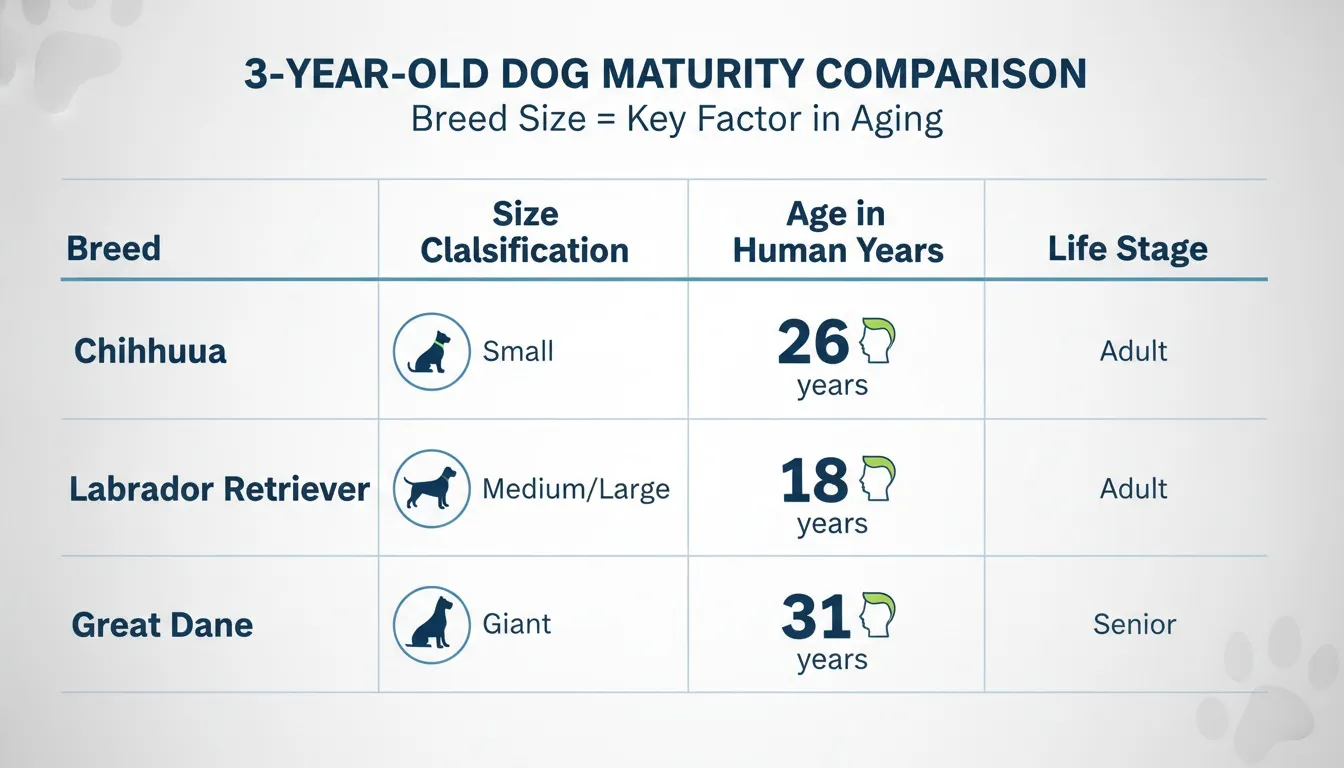
When looking at your 3-year-old dog, the specific breed plays a major role in their aging process. While the general formula provides a solid baseline, different breeds reach their life stages at slightly different speeds.
The table below shows how a 3-year-old dog translates to human years across some of the most popular breeds:
| Breed | Size | Human Years at 3 | Life Stage |
|---|---|---|---|
| Golden Retriever | Large | 28 | Adult |
| Labrador | Large | 28 | Adult |
| German Shepherd | Large | 28 | Adult |
| Chihuahua | Small | 26 | Young Adult |
| French Bulldog | Small | 26 | Young Adult |
| Great Dane | Giant | 31 | Mature Adult |
This breakdown illustrates that a 3-year-old dog is generally in a stable and healthy window regardless of their breed. While larger and giant breeds like the Great Dane may have higher human-age equivalents, all these breeds at three years old are typically past their initial growth spurts. Understanding your dog’s specific place in these life stages helps you provide the right care as they continue their journey.
How Many Years Does My 3-Year-Old Dog Have Left?
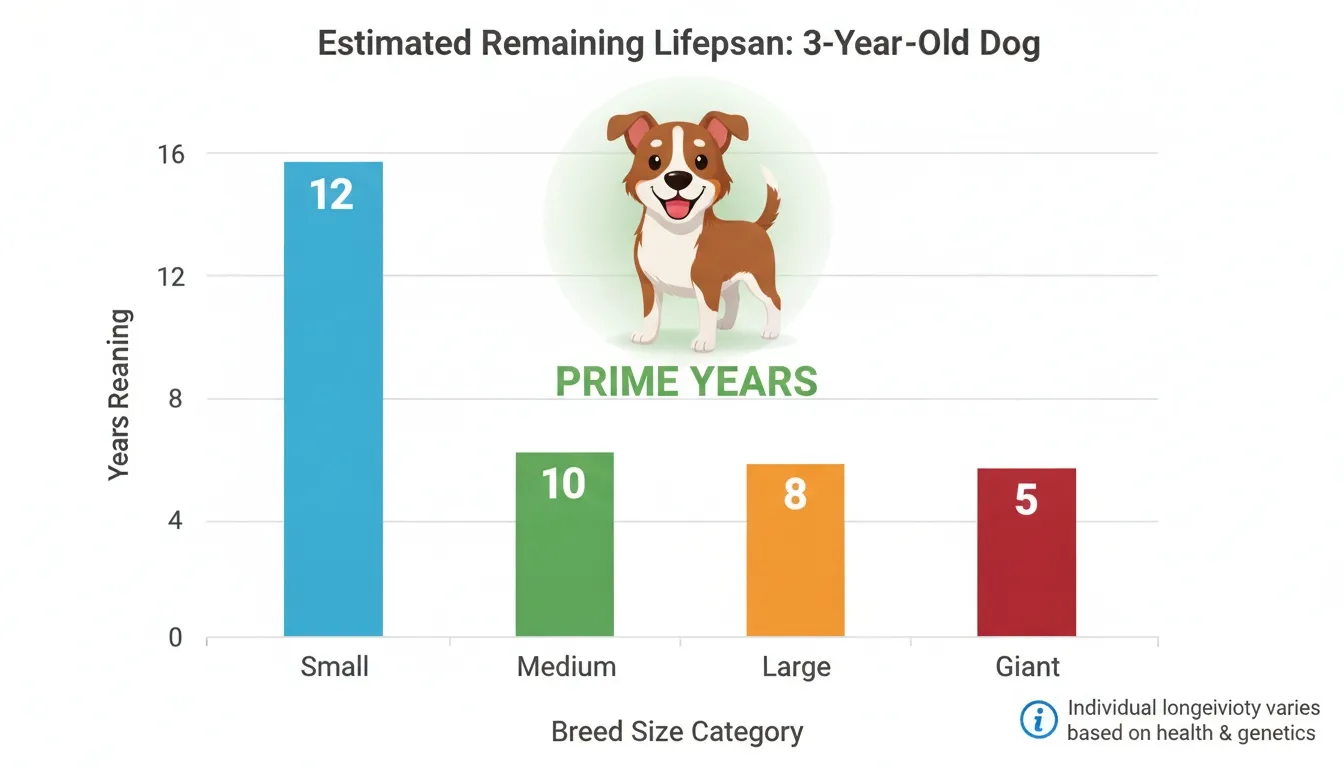
When you look at your 3-year-old dog, it is natural to think about the journey ahead and how much quality time you have together. Please remember that these numbers are only averages; every dog is an individual, and factors like genetics, diet, and lifestyle play a huge role in their longevity.
Rather than focusing on the math, view this as a reminder that these are your dog’s prime years. They are physically capable, mentally sharp, and ready to share countless adventures with you. Enjoy every single moment of this golden chapter in their life.
The following table estimates the remaining years based on general breed size expectations:
| Size | Avg Lifespan | Age Now | Years Remaining |
|---|---|---|---|
| Small | ~15 yrs | 3 | ~12 years |
| Medium | ~13 yrs | 3 | ~10 years |
| Large | ~11 yrs | 3 | ~8 years |
| Giant | ~8 yrs | 3 | ~5 years |
Is My 3-Year-Old Dog Healthy? Signs to Check
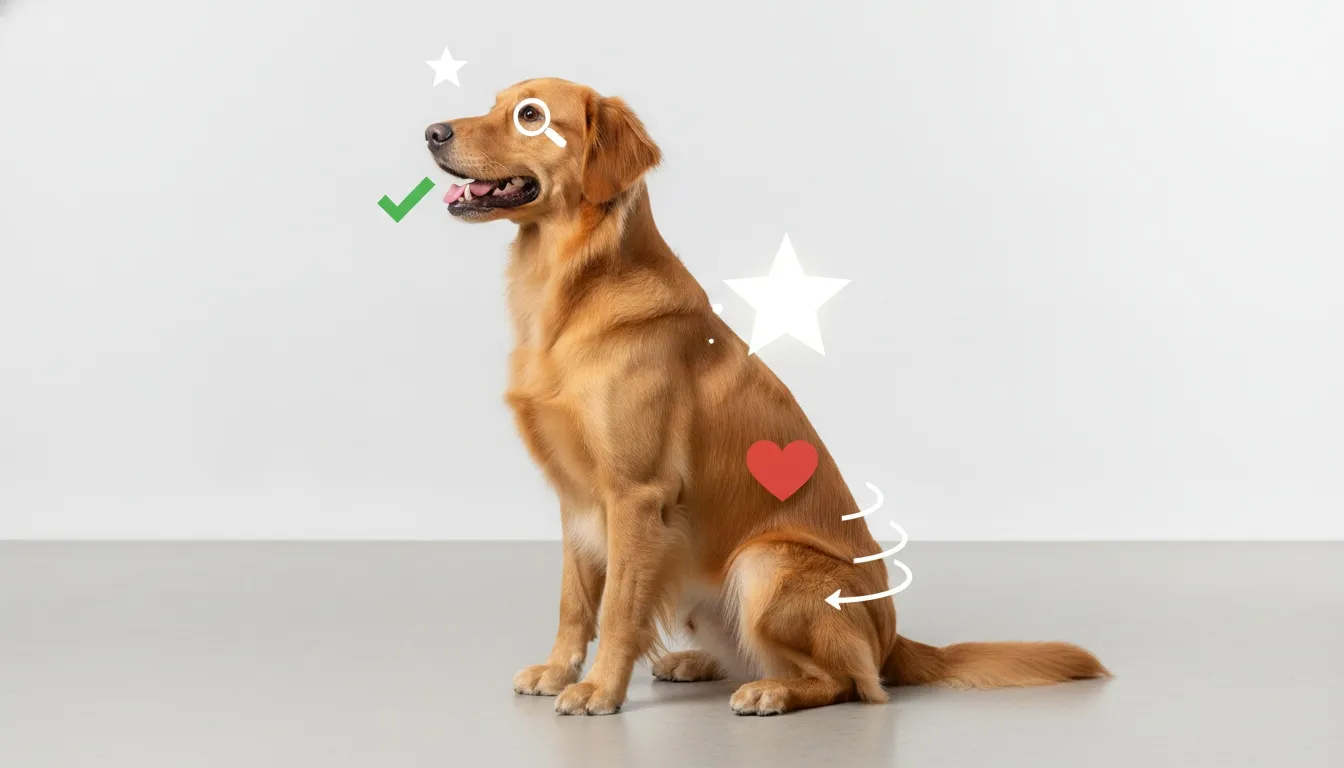
Checking Your Dog’s Health
Since your 3-year-old dog is likely in their physical prime, this is the perfect time to establish a baseline for their wellness. You can easily spot a thriving dog by looking for these five indicators:
A shiny, soft coat that reflects good nutrition.
A healthy weight where you can feel but not see their ribs.
Bright, clear eyes without discharge or irritation.
Consistent energy levels during play and walks.
A steady appetite for their regular meals.
If your companion is meeting these milestones, they are likely feeling their best. You can monitor their development over the coming years when you use our free dog age calculator to understand what physical changes to expect next.
Red Flags to Watch For
Even a young adult can face health challenges, so stay observant. If you notice any sudden shifts in your dog’s behavior or physical condition, you should prioritize a visit to your vet.
Keep an eye out for these four warning signs:
Unexplained sudden weight change or loss of appetite.
Unusual lethargy or disinterest in their favorite activities.
Dental issues like persistent bad breath or inflamed gums.
Any signs of limping or difficulty with normal movement.
According to the AVMA’s senior pet care resources, being proactive about these changes is the best way to ensure long-term health. Do not wait to seek professional advice if something seems off with your dog, as early detection makes a world of difference.
Does Spaying or Neutering Change My Dog's Age?
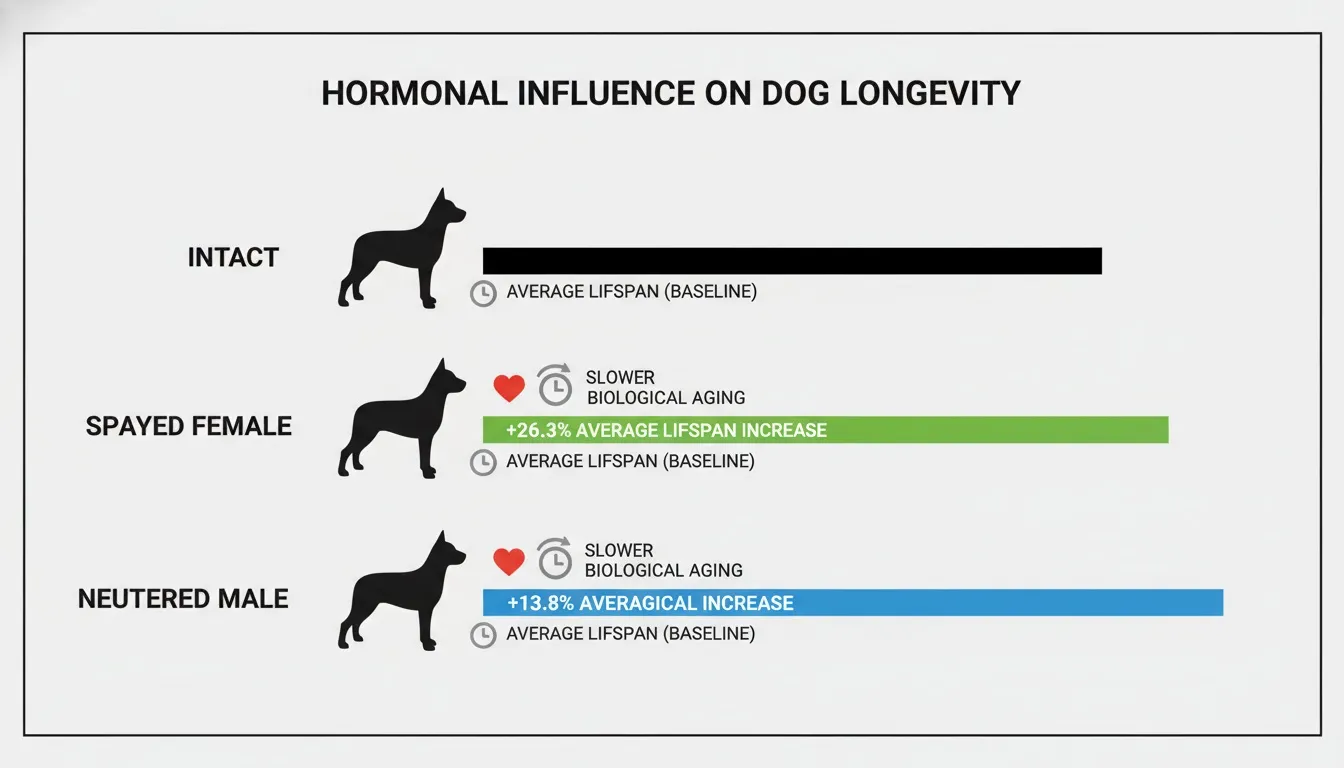
Understanding the Impact on Longevity
You might be surprised to learn that medical history actually influences how your dog ages. Recent data suggests that spayed and neutered pets often live longer lives than those that are not.
According to research from University of Georgia veterinary studies via Zoetis Petcare, female dogs that were spayed saw a 26.3% increase in lifespan. Similarly, neutered male dogs experienced a 13.8% longer life on average.
How This Affects Your 3-Year-Old Dog
Because your dog’s hormonal status influences their overall longevity, it also shifts their aging curve slightly. This means your pet’s biological clock might tick just a bit slower than that of an intact dog.
Adjusting for their hormonal status provides a personalized view of their life stage. Accounting for these factors helps you better tailor their nutrition, exercise, and preventative care to their specific needs.
Rescued Dog and Don't Know the Exact Age?
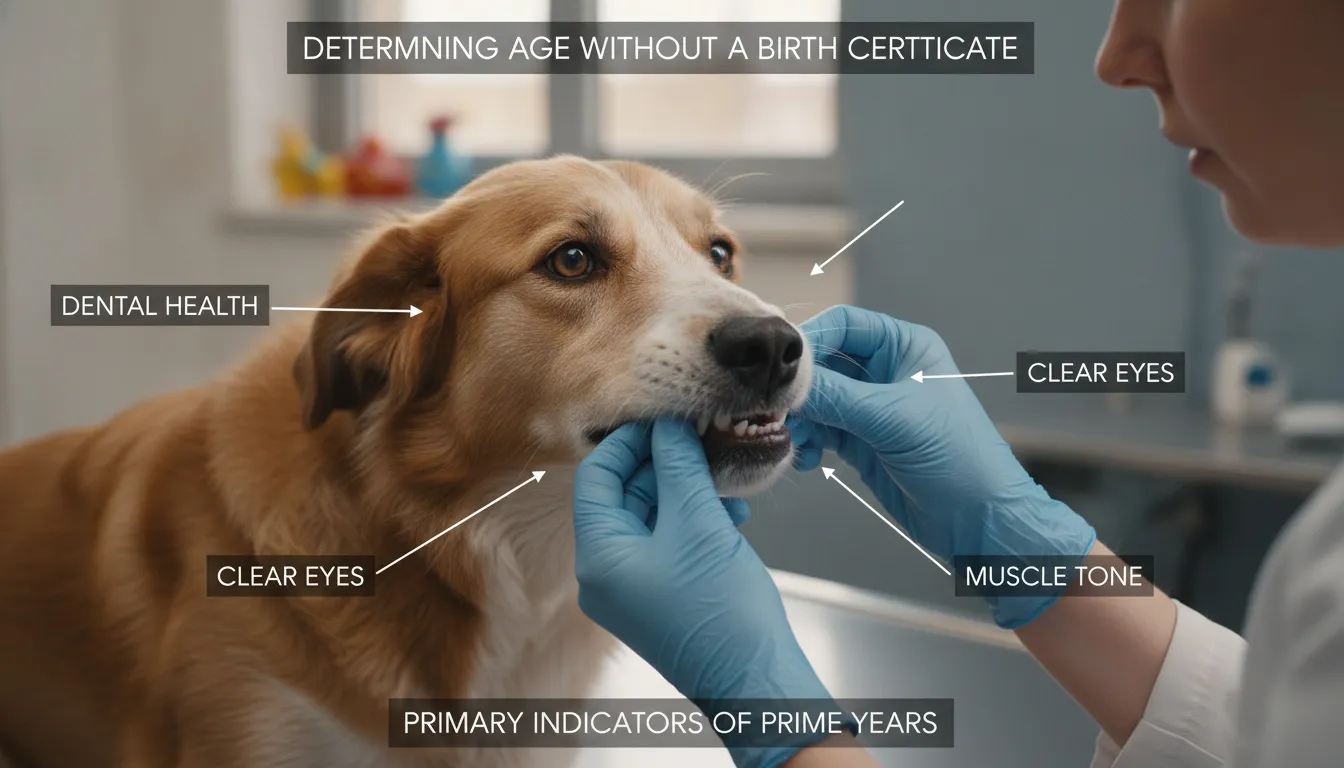
Getting a Reliable Estimate
If you adopted a rescue and your vet estimated your companion is roughly 3 years old, you have a solid starting point for their care. Since their birthday is a mystery, veterinary professionals determine their life stage by looking at specific physical indicators.
Your vet likely evaluated your dog’s age by examining these factors:
The wear and staining patterns on their teeth.
The luster and texture of their coat.
Clarity and lens health in their eyes.
Overall muscle tone and joint mobility.
Because these signs provide a professional assessment, you can confidently treat your pet as a young adult. If you are calculating 3 dog years in human years, a range of 26 to 30 human years is a valid and helpful estimate for their development.
Does the Exact Number Matter?
You might worry that not knowing your dog’s precise birth date will impact their health, but please rest assured. Your dog’s daily needs for nutrition, exercise, and love remain the same regardless of an exact calendar date.
Focusing on their current life stage is far more beneficial than stressing over a single digit. Whether they are technically three or slightly older, consistent vet checkups are the best way to monitor their health.
Remember that providing a safe, stable environment is what truly defines their well-being. Knowing if your dog is roughly 26 to 30 in human years is enough to guide your care and help you build a wonderful life together.
Vet-Approved Care Guide for a 3-Year-Old Dog
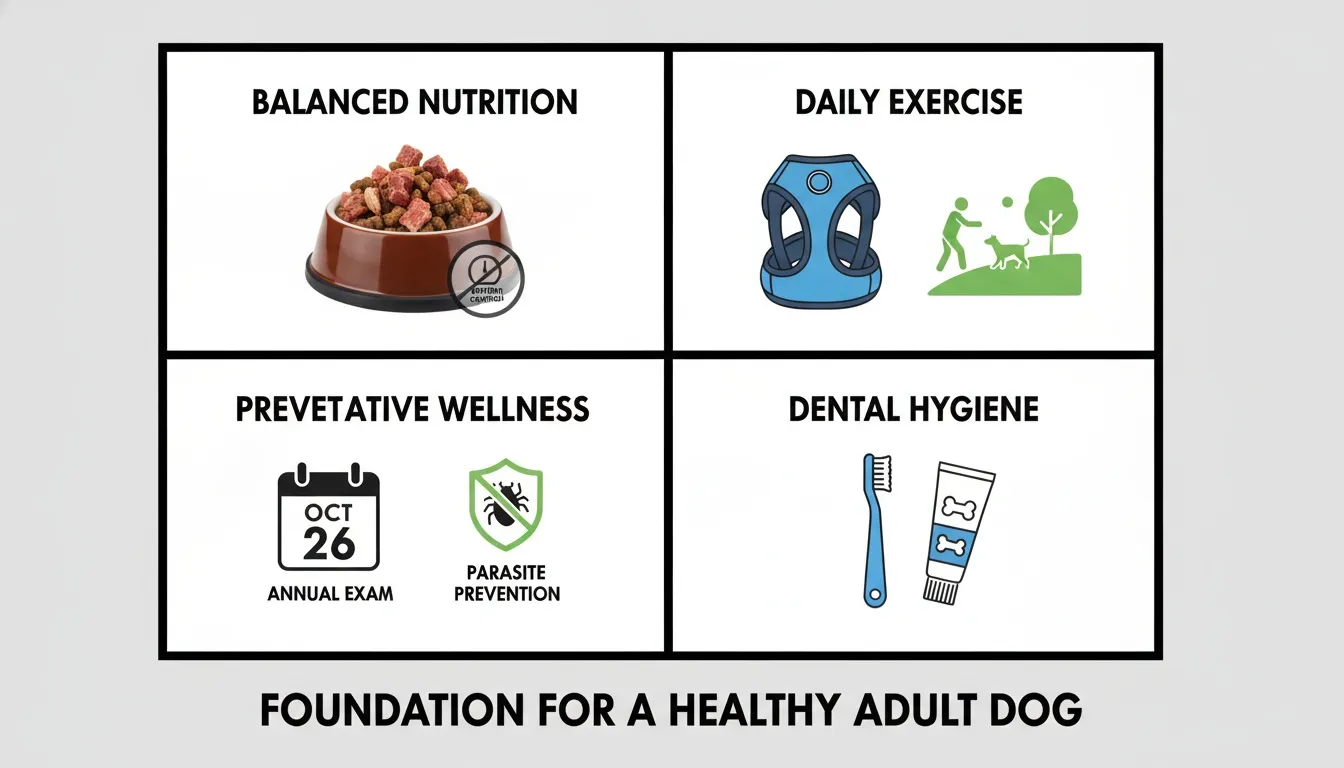
Your companion is now fully mature and requires a diet that supports long-term wellness rather than rapid growth. Focus on high-quality adult formula food that aligns with their specific activity level and breed size.
Portion control is key at this stage to prevent unwanted weight gain, which can stress joints later on. You should monitor their body condition regularly to ensure they maintain an ideal weight, as this is a cornerstone of health at this life stage.
Frequently Asked Questions
The old "seven-year rule" is outdated and inaccurate. For a medium-sized dog, 3 years is actually closer to 28 human years. Genetics and breed size play a much bigger role in their development than a simple multiplication formula.
Age varies significantly by breed size. Small dogs are roughly 26 in human years, while medium and large dogs are approximately 28. Giant breeds develop faster, reaching the equivalent of 31 human years by age three.
No, your dog is considered a fully mature adult. Most dogs reach physical and social maturity by this age. They have moved past the hyper-active puppy phase and are settled into their adult personality.
Focus on maintaining their long-term health with consistent routines. This includes annual vet checkups, a high-quality diet for weight control, daily exercise tailored to their size, and regular dental cleanings to prevent future issues.
Focus on maintaining their long-term health with consistent routines. This includes annual vet checkups, a high-quality diet for weight control, daily exercise tailored to their size, and regular dental cleanings to prevent future issues.
Lifespan depends heavily on size. A small 3-year-old dog may have about 12 years of life remaining, while a giant breed often has around 5 years left. Remember that these are just averages for your dog.
Yes, these procedures can impact longevity. Research indicates that spayed females may have a 26% longer lifespan, while neutered males often live about 13.8% longer. These medical factors slightly shift your dog's personal aging curve.
🐾 Other Age Guides

Gulfam Haider Mehdi
Founder & Developer
I built Dogagescalculator.com to give dog owners honest, science-backed answers instead of the outdated "×7" myth. Every figure here is checked against AKC, AVMA, and published veterinary research.
More about the author & this site →📌 Featured Guides
how long do red bone coon hounds live
→
What Is 8 Dog Years in Human Years
→
Senior Dog Care
→
20 human years in dog years
→
how long does a miniature australian
→
What Is 5 Dog Years in Human Years
→
How Long Do Pugs Live in Human Years?
→
What Is the Lifespan of a French Bulldog?
→
How Big Will My Puppy Get? Growth Chart & Calculator
→
How to Tell How Old a Bird Is
→
Comments