
What Is 12 Dog Years in Human Years? Complete Size Guide + Senior Care
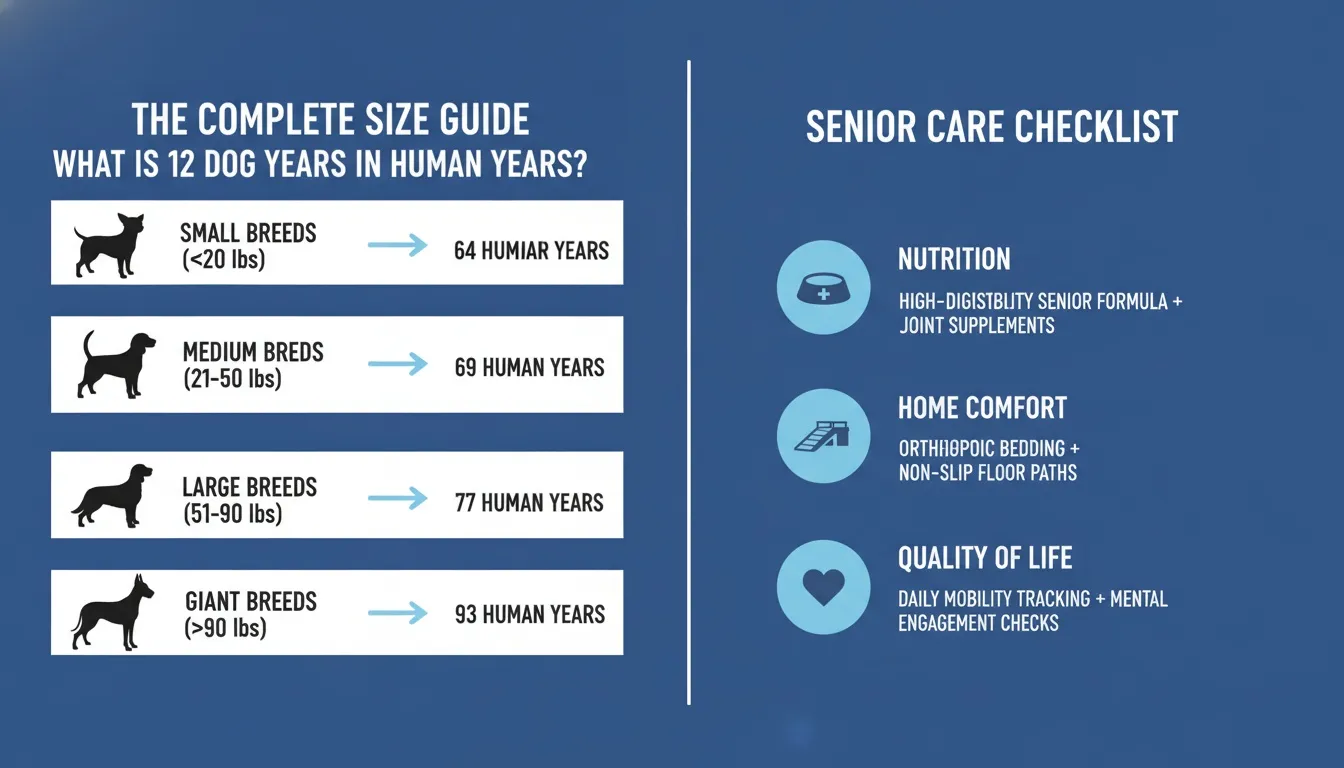
If you are wondering what 12 dog years in human years means, the answer depends mainly on your dog's size and breed. A 12-year-old dog is approximately 64 to 93 human years old using size-based estimates, with smaller dogs generally falling toward the younger end and giant breeds toward the older end.
The old “multiply by seven” rule would make a 12-year-old dog 84 human years old, but dogs do not age at a constant rate throughout their lives. They mature very quickly during their early years, and their aging pattern later varies with size, breed, genetics, and overall health.
How Old Is a 12-Year-Old Dog by Size?
A size-based estimate can give you a more useful picture of your dog's human-equivalent age than applying the same formula to every breed. Research into canine aging, including studies of DNA methylation, shows that dogs experience rapid biological development early in life and follow a different aging pattern as they grow older.
For a 12-year-old dog, the estimated human-equivalent age can vary considerably by adult body size:
| Dog Size | Example Breeds | Estimated Human Age |
|---|---|---|
|
Small Under 20 lbs / 9 kg | Chihuahua, Pomeranian, Yorkie | ~64 years |
|
Medium 21–50 lbs / 10–23 kg | French Bulldog, Cocker Spaniel | ~69 years |
|
Large 51–90 lbs / 24–41 kg | Golden Retriever, German Shepherd | ~77 years |
|
Giant Over 90 lbs / 41+ kg | Great Dane, Mastiff, Saint Bernard | ~93 years |
If you want a personalized estimate based on your dog's age and size, you can use our free dog age calculator.
Is My Dog a Senior at 12 Years Old?
At 12 years old, many dogs are considered senior, although the timing of this life stage varies by breed and size. Smaller dogs often remain active for longer, while large and giant breeds may experience age-related changes earlier.
At this age, you may notice changes such as slightly lower energy, slower movement, longer recovery after exercise, or changes in vision, hearing, sleep, or behavior. These changes can be part of normal aging, but new or sudden changes should not automatically be dismissed as “just old age.”
Your dog's overall health, breed, body condition, and daily activity are more useful indicators of their needs than a human-equivalent number alone.
Practical Senior Dog Care for Your 12-Year-Old
Reaching 12 is an important milestone. As your dog gets older, small adjustments to their routine can help maintain comfort, mobility, and quality of life.
- Keep up with veterinary checkups: Older dogs benefit from regular health monitoring so that changes in weight, mobility, dental health, vision, or other body systems can be identified early.
- Choose appropriate exercise: Shorter, low-impact walks and gentle play can help keep an older dog active without putting unnecessary strain on their joints. Let your dog's comfort and fitness level guide the intensity.
- Support safe movement: Non-slip rugs, ramps, comfortable bedding, and easy access to food and water can make daily life easier for an older dog who has become less steady or mobile.
- Monitor changes in behavior: Changes in appetite, drinking, bathroom habits, sleep, activity, or interaction can sometimes signal an underlying health problem. Discuss noticeable or persistent changes with your veterinarian.
A 12-year-old dog has reached an advanced stage of life, but human-equivalent age is only an estimate. What matters most is your dog's individual health, comfort, mobility, and quality of life. With appropriate nutrition, exercise, preventive care, and veterinary monitoring, many older dogs can continue to enjoy meaningful and comfortable years with their families.
Quick Answer: 12 Dog Years by Breed Size
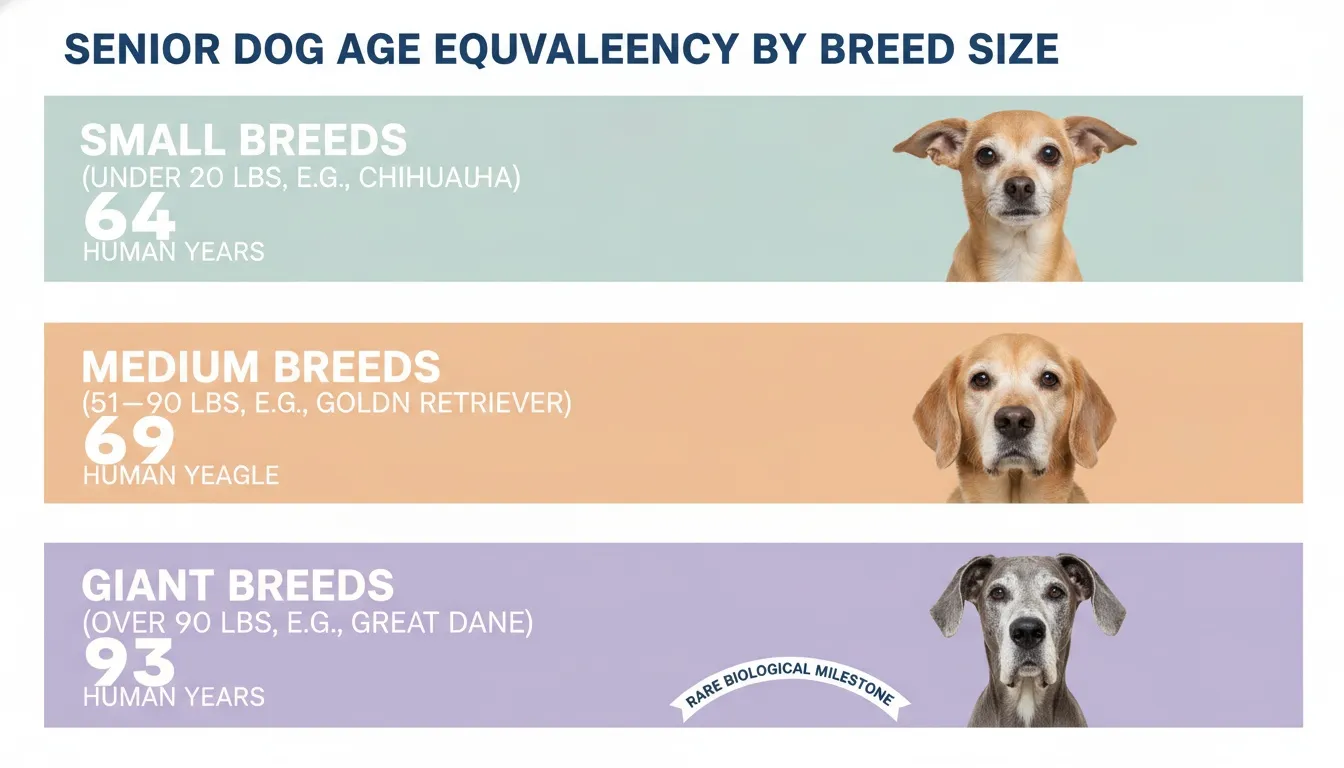
If you need a fast answer, your 12-year-old companion is roughly equivalent to a human in their mid-60s to mid-90s. Because smaller dogs have longer life expectancies than larger breeds, their biological age paths diverge drastically as they blow past their first decade.
Here is exactly how that 12-year milestone translates based on your dog’s weight category:
| Dog Size Class | Weight Range | Human Age Equivalent |
|---|---|---|
| Small Breeds | Under 20 lbs | 64 years old |
| Medium Breeds | 21 to 50 lbs | 69 years old |
| Large Breeds | 51 to 90 lbs | 77 years old |
| Giant Breeds | Over 90 lbs | 93 years old |
Every dog is an individual, and mixed breeds or specific genetic backgrounds can skew these numbers slightly. To get an exact, tailored calculation for your dog’s precise breed, mix, and health history.
Why "84 Human Years" Is Wrong
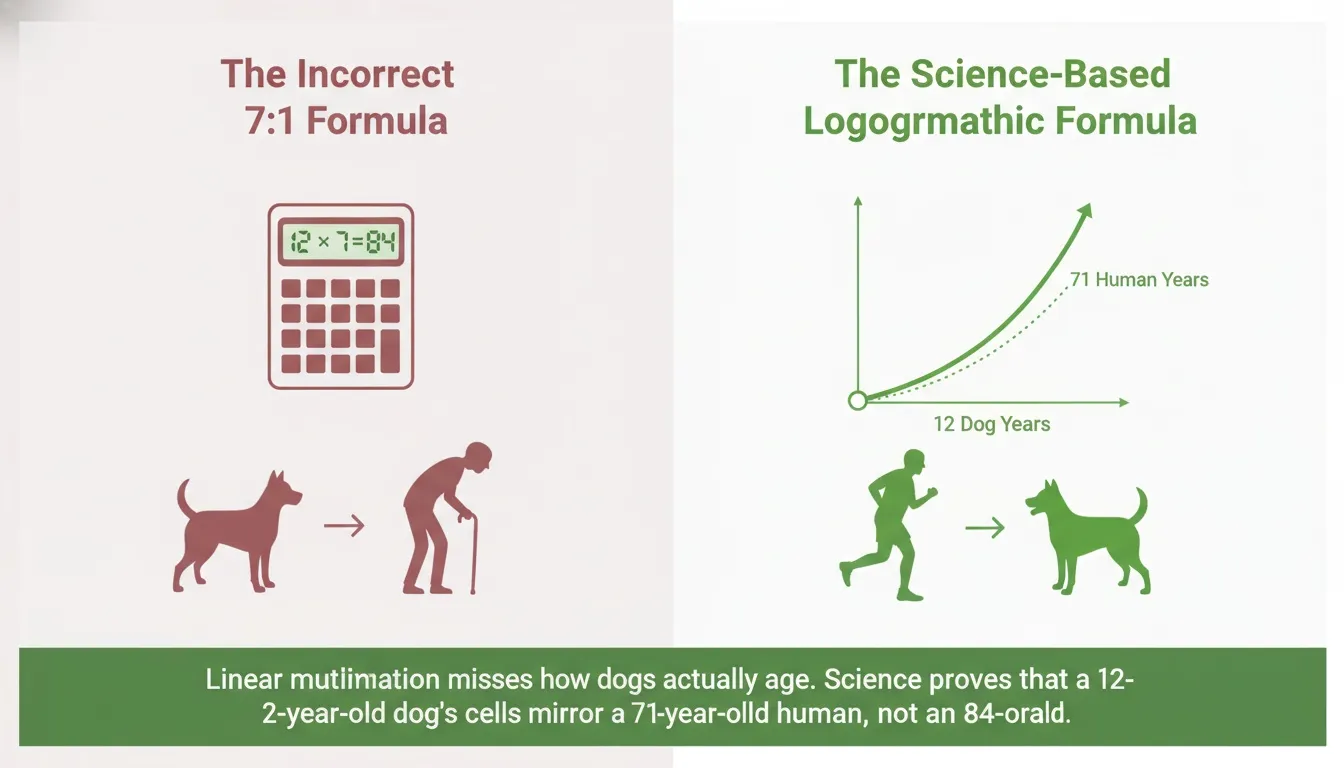
If you have been telling friends that your 12-year-old pup is 84 in human years, you are using an outdated calculation. For decades, the standard rule of thumb was simply to multiply a dog’s chronological age by seven. While this linear math is incredibly simple, it completely misrepresents the complex biological reality of canine development.
The idea that every single calendar year equals exactly seven human years assumes that dogs age at a perfectly steady, predictable pace throughout their lives. However, veterinary science has proven that a dog’s body undergoes drastically fast transformations in early life, followed by a much slower, prolonged aging curve as they grow older. Relying on the old “multiply by 7” rule means you are getting an inaccurate picture of your dog’s true physical status.
Where the 7x rule came from
The origin of the seven-year myth is surprisingly unscientific. Back in the mid-20th century, data showed that the average human lived to be about 70 years old, while the average companion dog lived to be roughly 10 years old.
The Math Behind the Myth: 70 human years divided by 10 dog years equaled a clean, memorable ratio of 7:1.
It was essentially a clever marketing and public relations strategy. By encouraging families to view their pets’ lives through a human lens, early veterinary advocates successfully raised awareness about the importance of regular health checkups. While it worked wonderfully to get dogs more medical attention, it was never based on real cellular biology.
The real 3-stage aging model
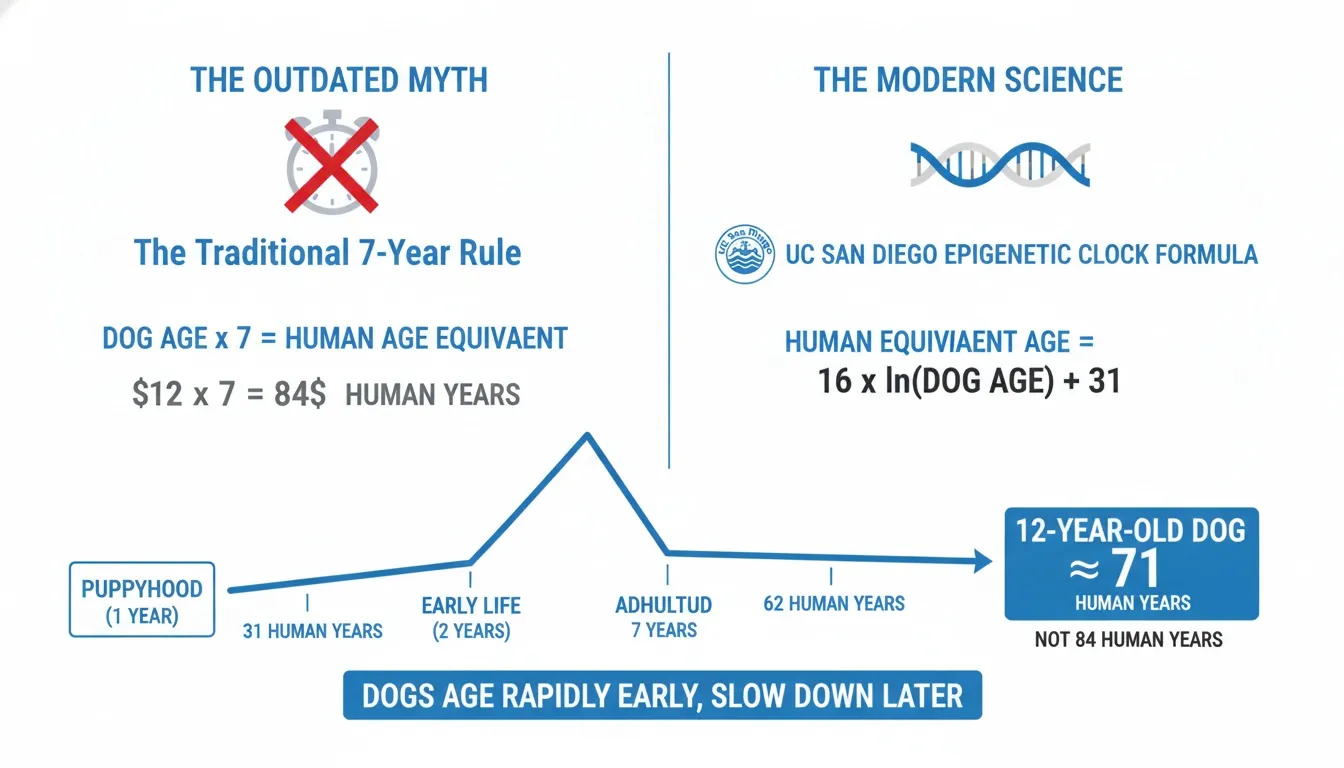
To fix this inaccuracy, researchers in the 2020 UC San Diego Epigenetic Study analyzed DNA methylation—chemical markers that track biological aging on a cellular level. The results completely reshaped how we map the canine lifespan, establishing a dynamic, curved three-stage aging model.
This scientific model breaks down into three distinct phases:
Phase 1: The Juvenile Rocket (Ages 0 to 1): Dogs age at an explosive rate during their first year of life. At just one calendar year old, a dog reaches a cellular maturity equivalent to a 30-year-old human, completely shattering the old seven-year rule.
Phase 2: The Deceleration Zone (Ages 2 to 7): After the initial burst, the aging clock slows down dramatically. By age four, a medium-sized dog is roughly comparable to a 52-year-old human, meaning they only aged 22 human equivalent years over a three-year calendar span.
Phase 3: The Gentle Slope (Ages 8+): By the time your dog hits the double-digit mark, their biological clock moves at a crawl. Between ages 9 and 12, a dog only ages a few human years annually.
Understanding this accurate, non-linear timeline changes everything. Instead of assuming your 12-year-old dog has the worn-out body of an 84-year-old, you can appreciate that their cellular aging has slowed down, giving you a beautiful, extended window to protect and enjoy their golden years.
The Science Behind It — UC San Diego
To truly understand your 12-year-old dog’s biological age, we have to look at genomes rather than calendar pages. In 2020, researchers at the University of California San Diego set out to find a precise, data-driven way to match canine and human lifespans. Instead of guessing based on physical appearance or average life expectancy, they looked directly at the chemical switches inside your dog’s cells.
What the Epigenetic Study Found + The Formula
The UC San Diego team focused their research on a process called DNA methylation. As dogs and humans grow older, tiny chemical tags called methyl groups attach themselves to DNA strands, turning certain genes on or off like light switches. By tracking these predictable genetic changes across hundreds of Labrador Retrievers and humans, scientists discovered that both species develop matching chemical milestones at specific points in their lives.
However, the speed at which these switches flip is not steady. The study revealed that a dog’s biological clock ticks incredibly fast in the first few years and then shifts into a much slower gear for the rest of their life.
To map this curved path accurately, the researchers created a logarithmic formula:
Human Age = 16 * ln(Dog Age) + 31
How it works: The formula takes the natural logarithm (ln) of your dog’s calendar age, multiplies it by 16, and then adds 31 to find the human biological equivalent.
For a 12-year-old dog, the calculation works out like this:
Step 1: Find the natural logarithm (ln) of 12, which equals 2.485.
Step 2: Multiply 2.485 by 16, which equals 39.76.
Step 3: Add 31 to 39.76 to get the final cellular age of 70.76.
This means your 12-year-old dog has a biological age of roughly 71 human years old.
While this mathematical formula gives veterinarians an incredibly precise look at cellular aging, it does have one limitation: the original study was performed entirely on a single breed. Because smaller dogs consistently live longer than giant ones, veterinary experts still adjust these raw logarithmic scores to match your dog’s specific weight class.
Is a 12-Year-Old Dog a Senior?
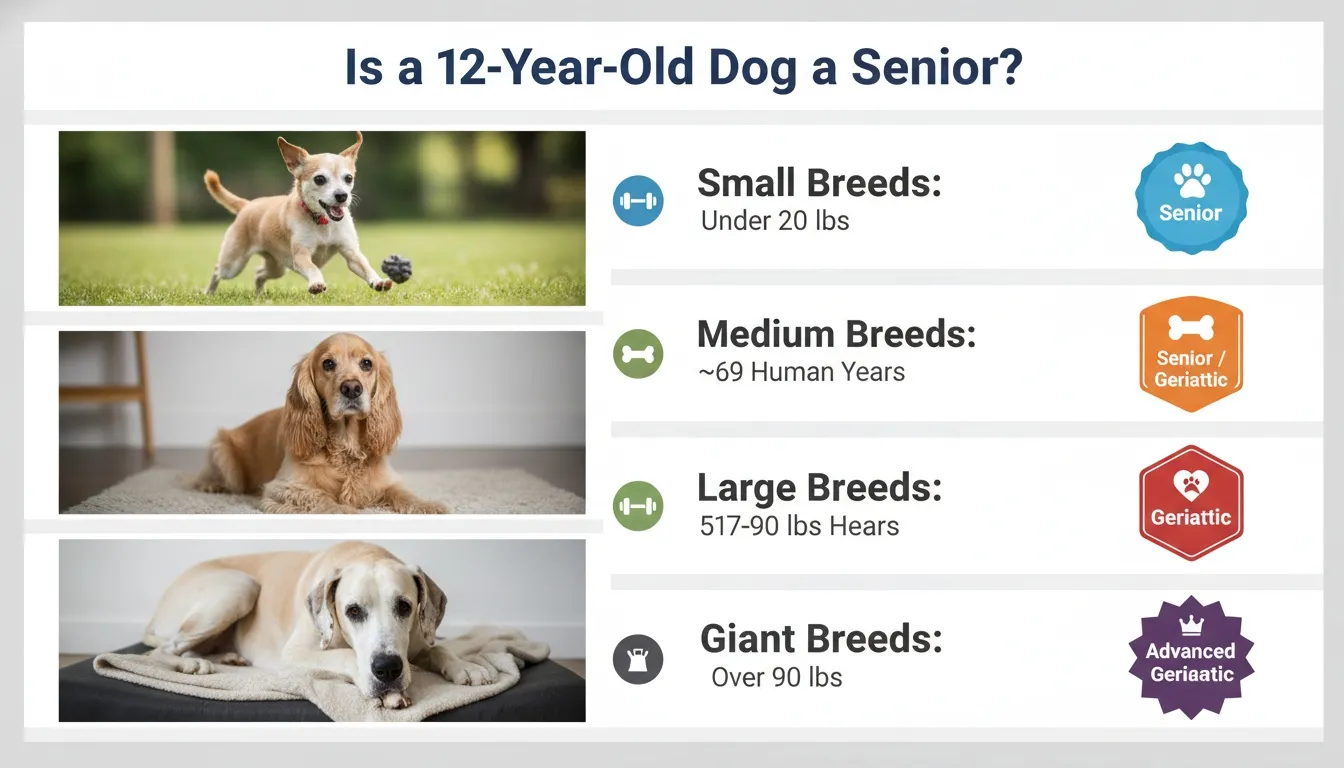
If you are noticing a few more grey hairs around your dog’s snout or seeing them take a little extra time to get up after a nap, it is because they have officially reached their golden years. At 12 years old, your dog is definitively a senior pet, no matter their breed or body size.
Veterinarians do not use a single blanket age to determine when a dog grows old. Instead, they look at how your dog’s specific weight class impacts their internal biological clock.
Understanding Senior and Geriatric Stages by Size
According to life stage guidelines from the American Veterinary Medical Association (AVMA), older dogs are actually divided into two distinct biological phases: Senior (the initial aging phase) and Geriatric (the advanced elderly phase). Because larger bodies wear out faster on a cellular level, a giant breed hits these milestones years before a toy breed does.
The AVMA data highlights exactly how your dog’s specific size class determines where they stand at 12 years old.
| Weight Category | Senior Transition Age | Geriatric Transition Age | Biological Standing at 12 Years Old |
|---|---|---|---|
| Small Breeds (Under 20 lbs) | 7 to 8 years old | 11 to 12 years old | Just entering the Geriatric phase |
| Medium Breeds (21 to 50 lbs) | 7 years old | 10 to 11 years old | Firmly in the Geriatric phase |
| Large Breeds (51 to 90 lbs) | 6 years old | 9 years old | Deep into the Geriatric years |
| Giant Breeds (Over 90 lbs) | 5 years old | 8 years old | An incredibly rare, ultra-elderly centenarian |
Knowing whether your dog is a young senior or entering a true geriatric stage changes how you approach their care. While a 12-year-old Chihuahua might just be slowing down a tiny bit, a 12-year-old Golden Retriever requires highly specialized, attentive lifestyle adjustments to stay comfortable.
12 Dog Years by Breed
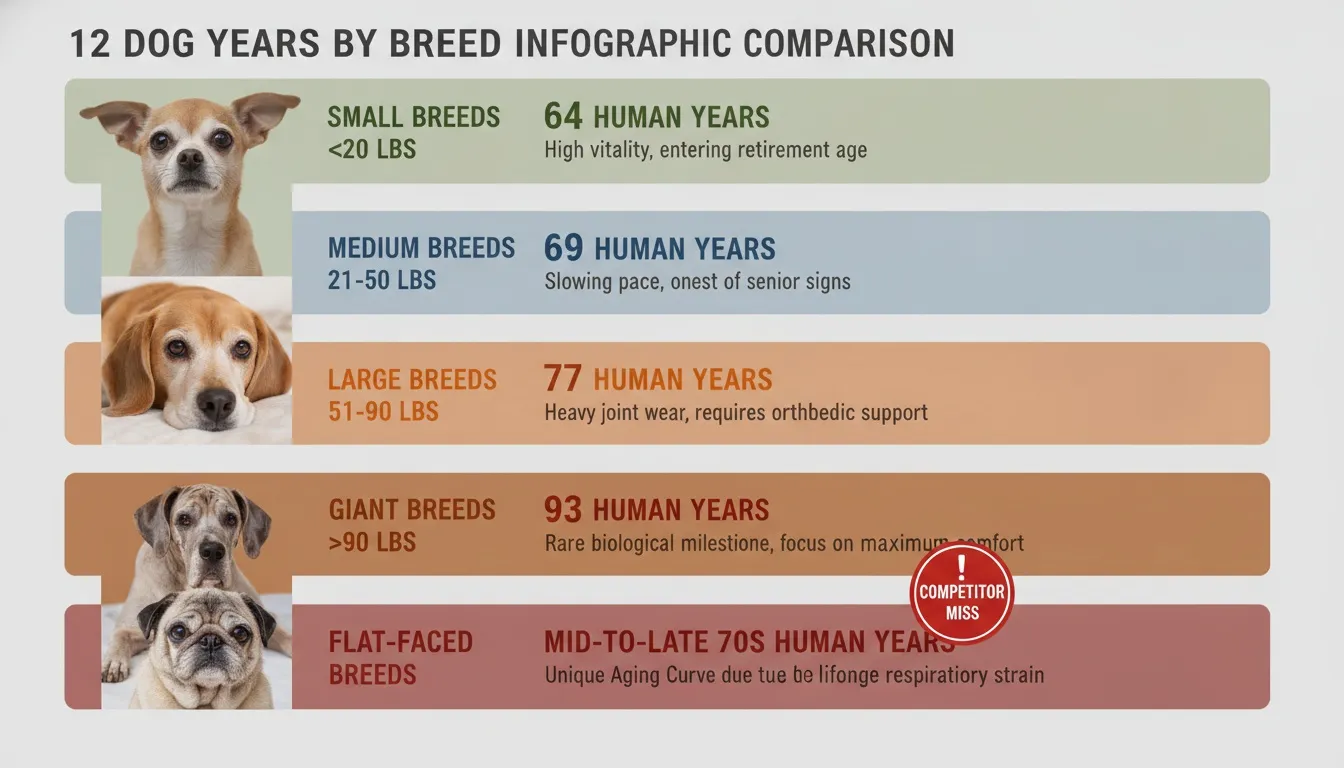
While grouping dogs by weight gives us a fantastic starting baseline, genetics play a massive role in how gracefully your specific companion reaches their twelfth birthday. Different breeds experience the aging process uniquely, which directly affects their daily energy levels, health vulnerabilities, and overall life expectancy.
Looking closely at specific breed profiles helps you look past a generic chart number and understand the physical reality of your 12-year-old dog.
Small breeds at 12
For tiny companions like the Chihuahua, Yorkshire Terrier, and Maltese, hitting 12 calendar years means they are hovering around a human equivalent of 64 years old. Because their bodies do not have to work nearly as hard to pump blood or support weight, small breeds often enjoy incredibly long lifespans.
At 12, a small breed is like a healthy human who is just hitting retirement age. They might have a bit less patience for loud noises and need more naps, but many small dogs remain highly active, spunky, and playful well into their teens.
Medium breeds at 12
Popular medium-sized favorites like the Cocker Spaniel, Beagle, and Shetland Sheepdog sit at an equivalent human age of 69 years old when they reach 12. They are gently crossing the threshold into their true elderly years.
You will likely notice their snouts turning solid white, and they might show early signs of cloudy eyes. While they still love their daily walks, they will naturally prefer a slower, more relaxed pace rather than chasing tennis balls all afternoon.
Large breeds at 12
For a Golden Retriever, Labrador Retriever, or German Shepherd, hitting 12 years old is a massive milestone equivalent to a 77-year-old human. Because large bodies experience faster cellular aging, these sweet dogs carry a lot more physical wear and tear by their twelfth year.
At this stage, your large senior is highly likely dealing with joint stiffness or arthritis. They need careful physical support, soft orthopedic bedding, and low-impact exercises to protect their hips and keep them moving comfortably.
Giant breeds at 12
Reaching 12 years old as a Great Dane, Mastiff, or Irish Wolfhound is an extraordinary, rare achievement that equates to a human living to be 93 years old. According to the AKC, the average lifespan for giant breeds is only 8 to 10 years.
If you are currently caring for a 12-year-old giant dog, you are looking at a true biological miracle. Their daily routine should focus purely on maximum comfort, pain management, and easy accessibility around the house.
Flat-faced breeds at 12
Brachycephalic (flat-faced) breeds like the Pug, French Bulldog, and Boston Terrier have a completely unique aging curve that standard size charts usually miss entirely. Even though they are small or medium in size, their compressed airways make their bodies work twice as hard to breathe and cool down.
By age 12, flat-faced dogs are biologically closer to a human in their mid-to-late 70s rather than their 60s. Over a decade of respiratory strain takes a real toll on their hearts and joints. At this milestone, it is absolutely vital to protect them from heat stress, maintain a slim body weight, and listen closely for any sudden changes in their breathing or snoring patterns.
How to Tell If Dog Is ~12 Without Birth Date
If you adopted your dog later in life, or if their early history is a complete mystery, you might find yourself guessing their true age. Fortunately, time leaves distinct, predictable signatures on a dog’s body.
While it is impossible to pinpoint an exact birth date down to the month, veterinarians evaluate a specific checklist of physical markers to determine if a dog has reached that classic, 12-year-old senior milestone.
Physical clues vets use
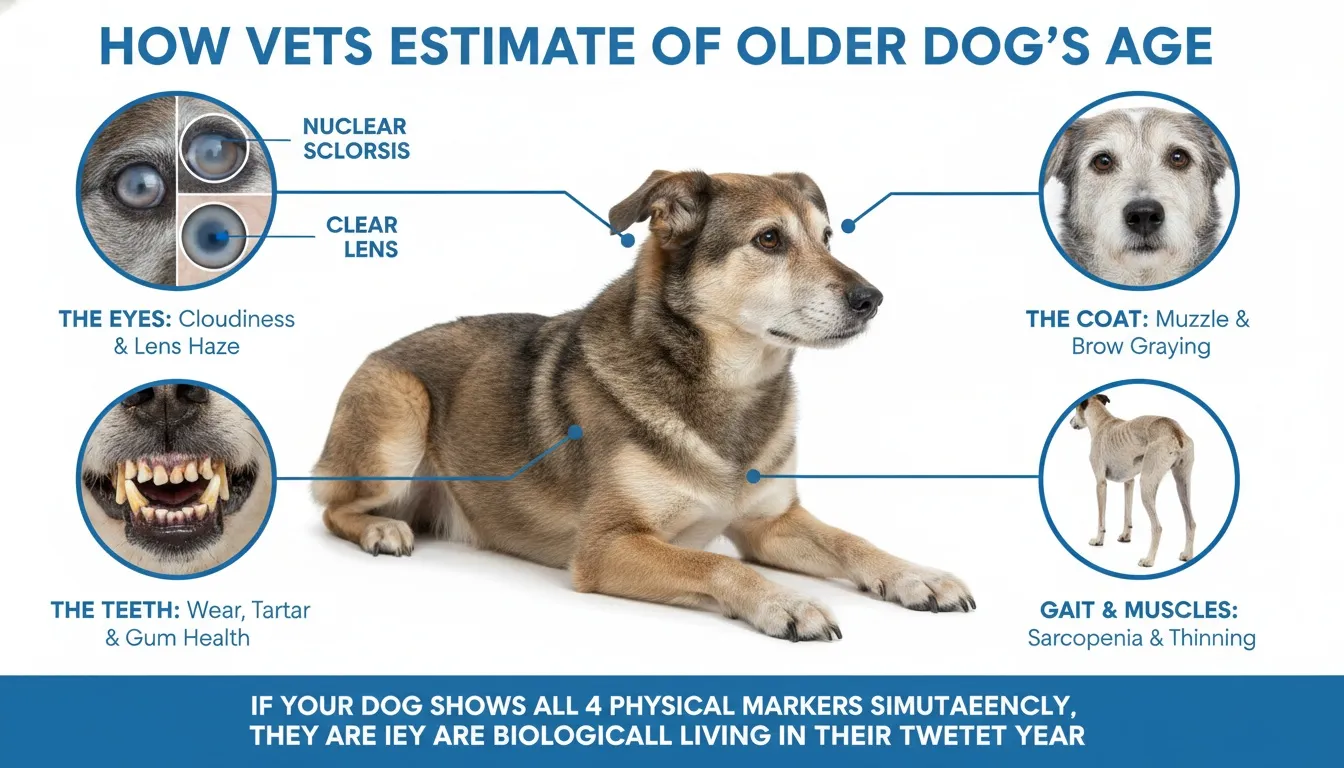
When a dog reaches roughly 12 years of age, their body undergoes predictable cellular and structural changes. By looking closely at four specific areas, you can tell if your companion is living in their twelfth year:
The Teeth (Advanced Wear and Tartar): By age 12, a dog’s teeth show significant biological wear. You will typically see heavy tartar accumulation, noticeable staining, and flattening or blunting of the small incisor teeth at the front of the mouth. Gingivitis (red, inflamed gums) or missing teeth are also highly common at this advanced stage.
The Eyes (Nuclear Sclerosis vs. Cataracts): If you notice a bluish, hazy tint deep inside your dog’s pupils, you are likely looking at lenticular sclerosis (nuclear sclerosis). This is a completely normal, non-painful hardening of the eye lens that consistently appears in senior dogs. It looks different from cataracts, which are thick, opaque, white blockages that can impair vision.
The Coat (The Silver Mask): While some dogs go grey early, a 12-year-old dog almost always sports an extensive frame of white or silver fur. This “frosting” typically blankets the entire muzzle, extends up around their eyebrows, and can even spread down onto their chest and paws.
The Gait (Loss of Muscle Tone and Stiffness): Watch your dog stand up from a deep sleep. A 12-year-old dog often displays a stiff, careful gait during their first few steps. You will also notice a physical phenomenon called sarcopenia (age-related muscle wasting), where the muscles over their lower back, hips, and hind legs look noticeably thinner or more sunken than they used to.
If your dog ticks every single one of these boxes, they are almost certainly navigating their twelfth year. Recognizing these markers allows you to work closely with your vet to build a lifestyle plan that treats their age accurately.
What to Expect from a 12-Year-Old Dog
Living with a 12-year-old dog is a beautifully rewarding experience, but it requires adjusting your expectations to match their shifting physical reality. At this stage, your dog’s daily rhythms, priorities, and physical capabilities are vastly different than they were even a few years ago.
Understanding what is completely normal for a dog in their twelfth year allows you to support them without unnecessary panic, while ensuring they stay safe and content.
Normal aging signs
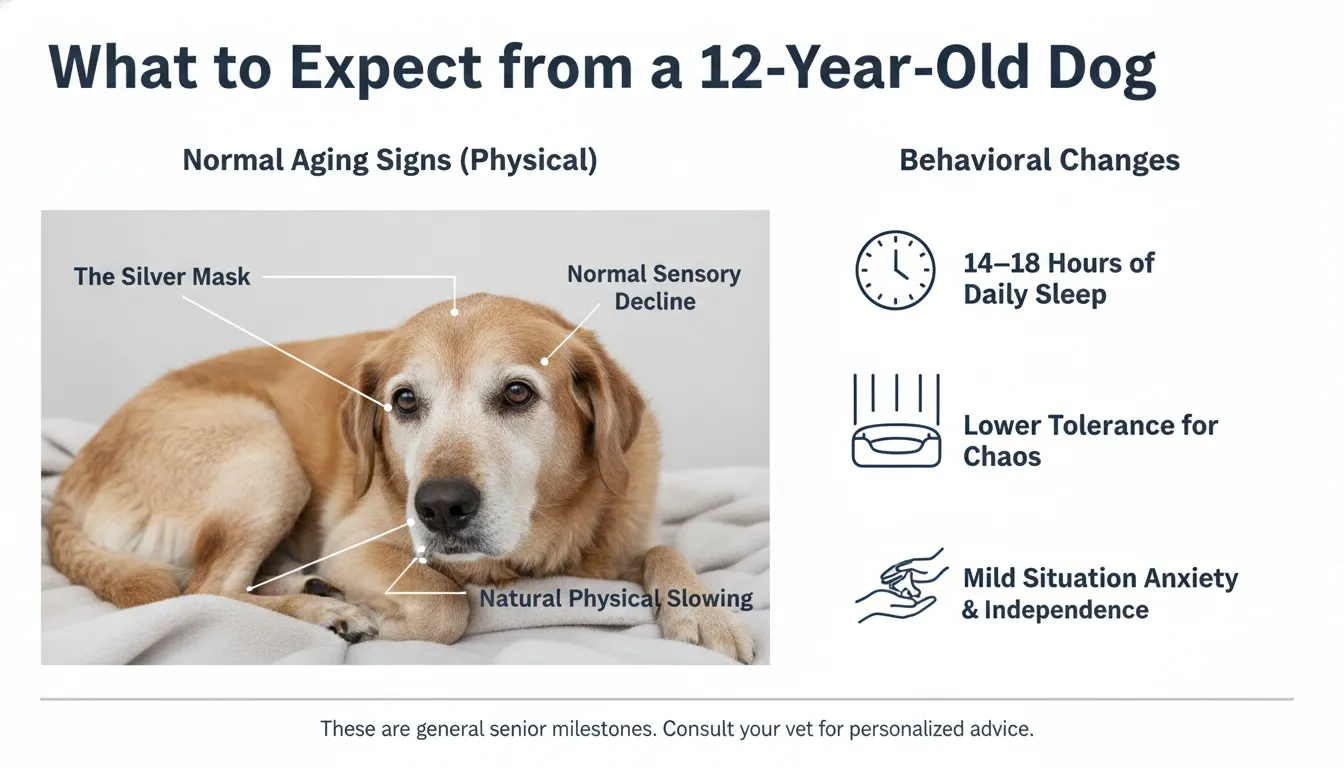
As your dog navigates their twelfth year, their body undergoes several universal, expected physical changes. These shifts are a natural part of growing old on a cellular level:
The Silver Mask: A significant amount of white or grey fur will blanket their muzzle, face, and eyebrows. The texture of their coat may also become coarser or thinner.
A Slower, Intentional Pace: Your dog will take longer to stand up, walk up stairs, or settle down into bed. Their movements become more deliberate as joint flexibility naturally decreases.
Increased Sleep Needs: It is perfectly normal for a 12-year-old dog to sleep between 14 to 18 hours a day. They will seek out quiet, deeply cushioned areas to rest their joints away from household commotion.
Mild Sensory Decline: You might notice they do not hear you open the treat cabinet from across the house anymore, or they may startle slightly if you approach them from behind while they are resting.
Behavioral changes
Physical aging directly influences how your senior dog interacts with their environment. You will likely notice a few shifts in their personality and social preferences:
Lower Tolerance for Chaos: A 12-year-old dog has much less patience for rowdy puppies, energetic young children, or sudden disruptions to their peaceful routine. They may choose to leave the room when things get too loud.
Increased Independence: Your dog might seem less eager to join in on family games or play with toys. They are often perfectly content simply sitting in the same room with you, watching the day pass.
Mild Situational Anxiety: Sensory loss can make the world feel a bit more unpredictable. Older dogs can become more attached to their owners, showing anxiety when you leave the house or when they are placed in unfamiliar settings.
Occasional Irritability: Just like humans, a body that feels a bit stiff can make a dog grumpy. If they snap or growl when touched in a specific spot, it is usually a direct sign of underlying physical discomfort rather than a behavioral flaw.
Recognizing these general changes as a normal part of their timeline helps you give them the grace and space they need to enjoy their retirement peacefully.
Canine Cognitive Dysfunction — Is It Dementia?
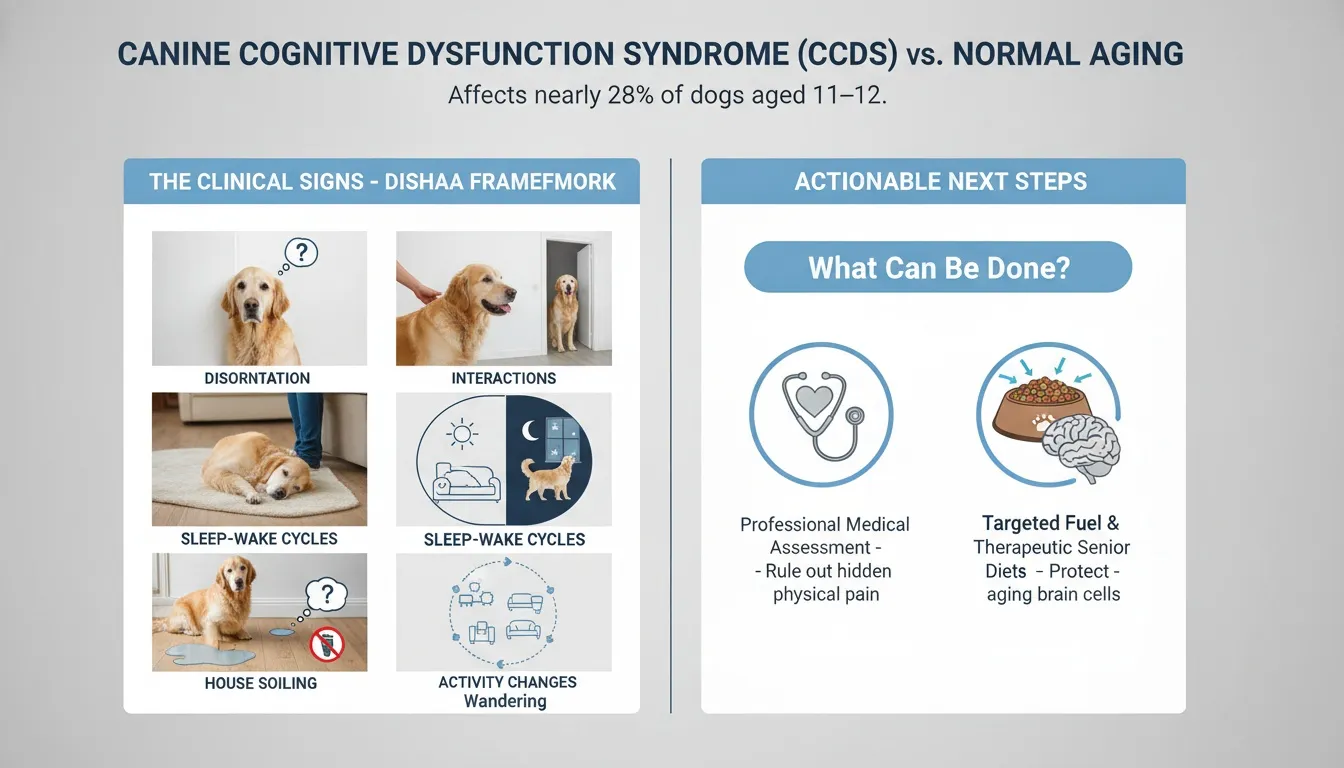
It can be heartbreaking to watch your once-sharp 12-year-old companion suddenly seem lost in a room they have slept in for a decade. While physical slowing down is expected as your dog grows old, certain behavioral shifts point to changes happening deep inside their brain.
Just like humans can develop Alzheimer’s disease, older dogs can suffer from a very real, age-related neurological condition that alters their mental clarity.
What is CCDS?
Canine Cognitive Dysfunction Syndrome (CCDS) is the veterinary equivalent of human dementia or Alzheimer’s disease. It is a progressive neurodegenerative disorder caused by the accumulation of amyloid plaques in the brain, alongside a natural decrease in cerebral blood flow.
This condition is incredibly common in older dogs, though it frequently goes undiagnosed because owners mistake the early indicators for simple old age. Research shows that roughly 28% of dogs aged 11 to 12 years exhibit at least one sign of cognitive decline, and that number skyrockets past 60% by the time they reach 15.
Specific CCDS Signs to Watch For
Unlike the general physical slowing down or increased sleep that comes naturally with a 12-year-old dog, CCDS alters a dog’s memory, spatial awareness, and deeply ingrained habits.
Veterinarians use the acronym DISHAA to categorize the highly specific behavioral red flags of canine dementia:
Disorientation: Your dog may stare blankly at walls, get trapped behind open doors, or stand on the wrong side of a door waiting for it to open.
Altered Interactions: They might stop greeting you at the door, pull away from affection, or conversely, become intensely clingy and fearful.
Sleep-Wake Cycle Changes: This is often the most disruptive sign. Your dog may sleep deeply all day but wake up agitated, vocalizing, and pacing restlessly across the floors all night long.
House Soiling: A fully house-trained dog may suddenly begin having accidents right in front of you, completely forgetting to signal when they need to go outside.
Activity Modifications: You might notice aimless wandering, repetitive pacing, or a total loss of interest in exploring their surroundings.
Anxiety and Memory Loss: They may look at familiar family members like strangers or completely forget basic commands they have known since puppyhood.
What Can Be Done to Help Your Dog?
If you recognize these specific behaviors in your 12-year-old companion, it is crucial to understand that they aren’t acting out on purpose—they are simply confused and need help. While there is no current cure for canine dementia, you can take immediate action to slow down its progression and improve your dog’s daily quality of life.
First, schedule a dedicated evaluation with your veterinarian. They can perform a thorough checkup to rule out hidden physical pain or urinary tract infections, which often mimic or worsen dementia symptoms.
Second, work with your vet to transition your dog to a specialized senior nutritional diet. Modern veterinary science has developed specific, therapeutic dog foods designed to cross the blood-brain barrier, providing target fuel sources that protect aging brain cells and sustain mental focus. Combining medical guidance with a predictable, stress-free household routine can dramatically comfort a disoriented senior dog.
How to Assess Quality of Life — Vet's Tool
Caring for a 12-year-old dog means balancing the profound joy of their companionship with the quiet responsibility of tracking their daily comfort. Because dogs are hardwired to hide chronic pain, it can be incredibly difficult to know exactly how they are feeling on the inside.
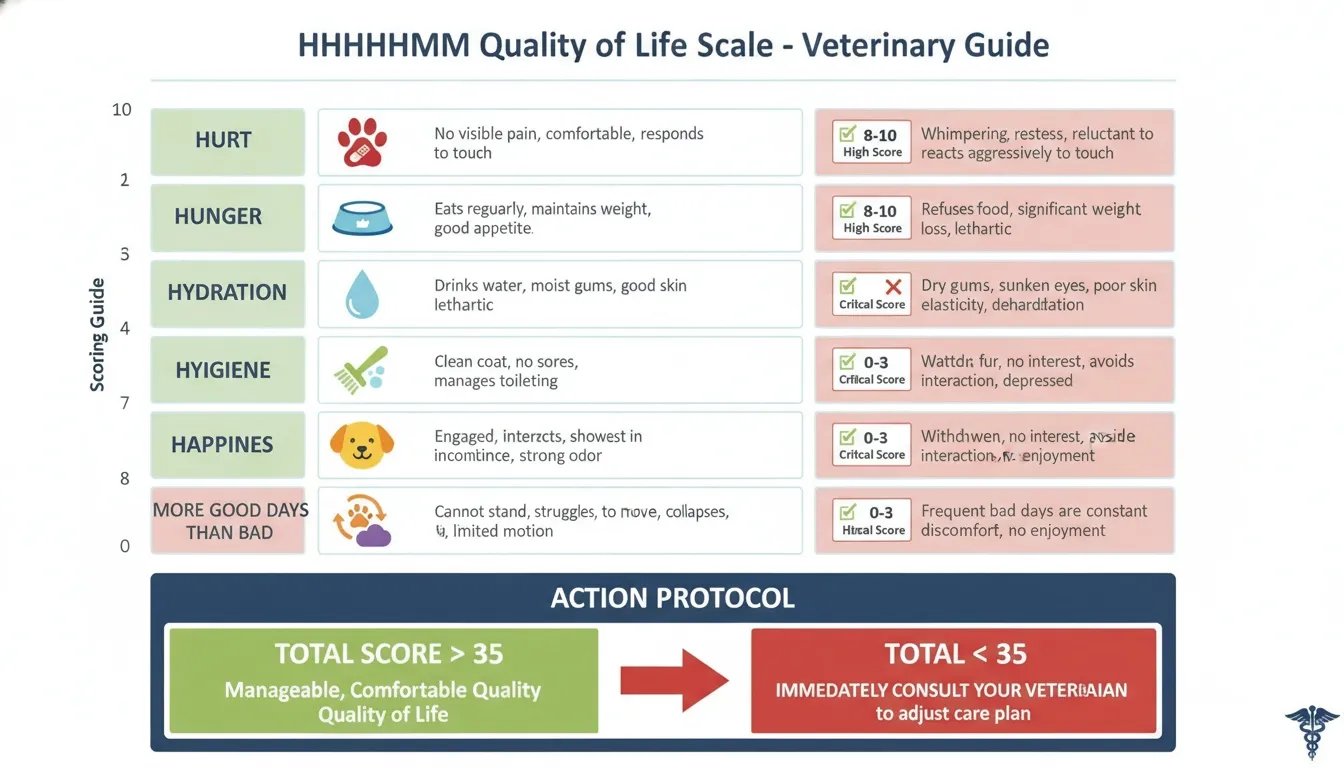
To help you look past your emotions and evaluate your dog’s wellness objectively, veterinary professionals rely on a clinical assessment framework called the HHHHHMM Quality of Life Scale. Created by veterinary oncologist Dr. Alice Villalobos, this tool removes the guesswork and helps you map out your dog’s good days and bad days with clarity.
The HHHHHMM Scale Explained
The scale breaks your dog’s daily well-being down into seven distinct, essential categories. Each area asks you to evaluate how well your dog’s physical and emotional needs are being met:
Hurt: Is your dog’s chronic pain successfully controlled? This includes assessing if they are breathing easily or if their arthritis is managed well with their current medical regimen.
Hunger: Is your dog able to eat enough nutritious food willingly? This can mean hand-feeding them or utilizing a veterinary-approved diet to ensure they maintain a stable weight.
Hydration: Is your dog staying properly hydrated? Dehydration is a common issue in older dogs who can no longer get up easily to visit the water bowl.
Hygiene: Can your dog be kept clean and dry? This is especially critical if they suffer from urinary or fecal incontinence, or if they can no longer stand to eliminate.
Happiness: Does your dog still experience genuine joy? Look for signs of mental engagement, like wagging their tail, greeting family members, or showing interest in their immediate surroundings.
Mobility: Can your dog get up and move around with minimal discomfort? This does not mean running; it means being able to safely navigate the home or go outside with or without assistive devices like a harness.
More Good Days Than Bad: When you look back at the past week, did the comfortable, peaceful, and happy days outnumber the days filled with struggle, pain, or anxiety?
How to Score + What Action to Take
To use this vet-validated tool at home, you score each of the seven categories on a number scale from 0 to 10 (with 0 indicating severe distress or complete loss of function, and 10 representing optimal wellness).
Once you have finished your assessment, add the numbers up to find your dog’s total quality of life score:
A Score Above 35: This indicates that your 12-year-old dog still maintains an acceptable, comfortable quality of life. Your current care plan is working beautifully, and you should continue supporting them with their regular routine.
A Score Below 35: This is a clear biological signal that their comfort is compromised. A low score does not mean you have to make an immediate end-of-life decision, but it does mean you need to take swift action.
If your dog’s score dips below 35, schedule an immediate consultation with your veterinarian to review the VCA quality of life guidelines. Use your specific category scores to show the vet exactly where your dog is struggling. Often, adjusting a medication dosage, changing their diet, or introducing environmental aids can instantly elevate their comfort and buy you more beautiful, pain-free time together.
When to Be Concerned — Serious Decline
While a gradual slowing down is a perfectly normal part of the aging process, you must be able to recognize the critical boundary between a peaceful retirement and a serious medical decline. Aging is inevitable, but living in pain or distress is not.
Knowing the exact warning signs of a failing system allows you to intervene before a manageable chronic condition turns into an acute health crisis.
Warning Signs That Need Immediate Vet Attention
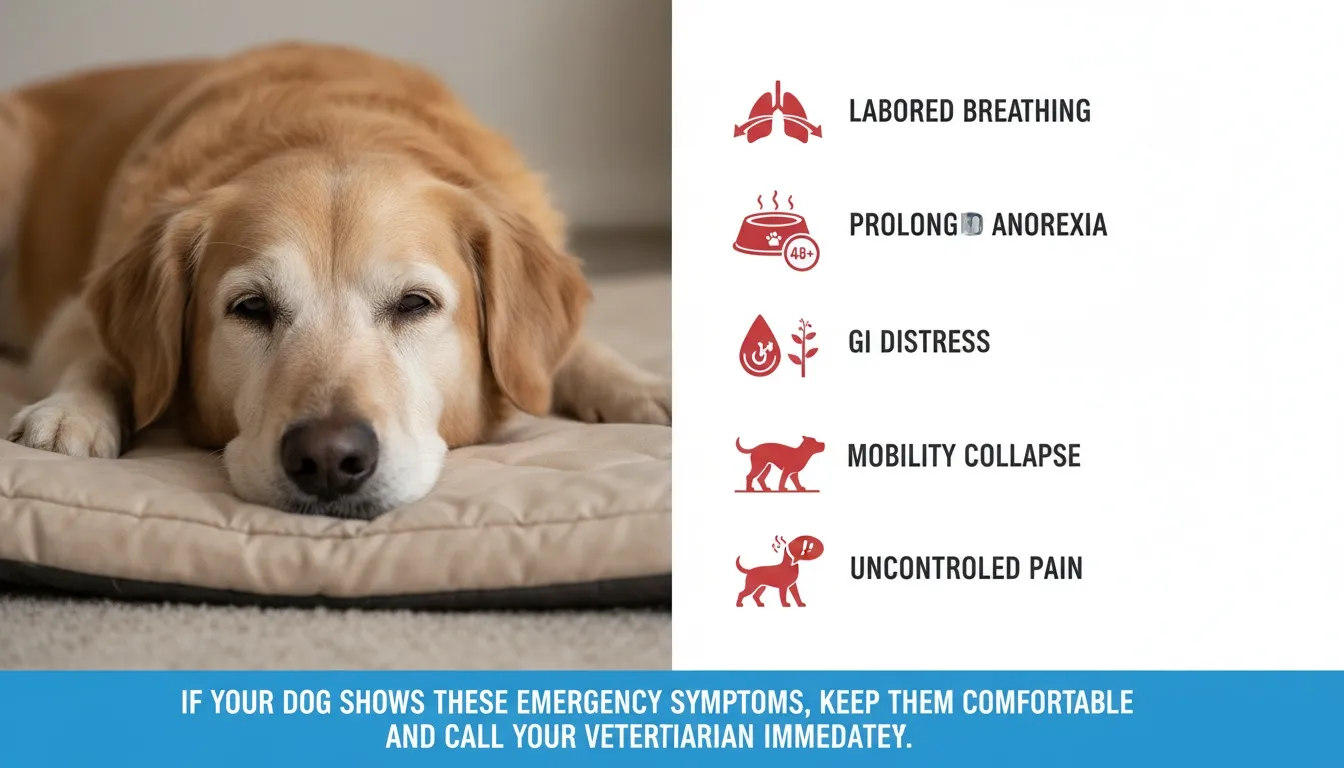
A serious biological decline shows up as a sudden, drastic drop in basic bodily functions or severe changes in your dog’s vital physical responses. You should contact a veterinary professional immediately if you observe any of the following critical red flags:
Labored or Heavy Breathing: If your dog is panting constantly while resting, breathing with their mouth wide open, or displaying a heavy, rhythmic pumping motion in their stomach walls, it indicates severe respiratory or cardiovascular distress.
Total and Prolonged Anorexia: Refusing meals for more than 48 hours straight—or completely walking away from their absolute favorite high-value treats—is a clear physiological signal that your dog is experiencing acute nausea, systemic infection, or severe internal pain.
Persistent Vomiting or Diarrhea: Ongoing gastrointestinal distress can cause an older dog’s hydration levels to plummet rapidly, leading to dangerous organ strain and severe weakness within a single day.
Complete Collapse or Inability to Stand: If your dog’s hind legs completely give out, or if they repeatedly try to stand up but cannot support their own weight at all, they require an emergency physical evaluation.
Uncontrolled Chronic Pain: Whining, vocalizing, heavy shaking, or an inability to find a comfortable sleeping position are clear indicators that their current pain management regimen is no longer working.
Step-by-Step What to Do Now
If you are seeing these warning signs right now, take a deep breath, gently place your dog on a soft, padded blanket to protect their joints, carefully look at your phone to check the hours of your closest emergency animal hospital, and call your veterinarian immediately to let them know you are on your way.
Complete Care Guide for a 12-Year-Old Dog

Caring for a dog in their twelfth year requires transitioning from general maintenance to highly targeted senior support. At this stage, your dog’s biological systems need extra help to function smoothly. By making purposeful changes to their daily care plan, you can directly slow down the progression of chronic conditions and significantly extend their comfortable years.
Nutrition
A 12-year-old dog has vastly different metabolic and nutritional needs than a younger adult dog. Because senior dogs experience a natural drop in metabolic rate and physical activity, they require highly digestible food with an adjusted caloric profile. For most seniors, this means a diet that is lower in calories to prevent obesity, which places dangerous strain on already-weakened joints. However, if your senior is losing weight due to age-related muscle wasting, they may actually require a nutrient-dense, highly palatable senior formula to maintain their body condition.
Look for diets fortified with high-quality, easily digestible proteins to preserve lean muscle mass, alongside critical joint-supporting compounds like glucosamine, chondroitin, and Omega-3 fatty acids (EPA and DHA) to reduce systemic inflammation. Since kidney and heart health are primary concerns at 12, keeping sodium and phosphorus levels under tight control is absolutely essential. Always consult your vet to choose a recipe tailored to your dog’s specific blood work and weight trend.
Dental Care
Dental disease is one of the most common, yet frequently overlooked, chronic health issues in senior pets. Clinical veterinary data shows that an astonishing 80% to 90% of dogs over the age of 3 have some form of periodontal disease. By the time a dog reaches 12 years old, a lifetime of bacteria, plaque, and tartar buildup has likely progressed to advanced stages underneath the gumline.
This isn’t just a matter of bad breath; advanced dental disease is a source of constant, throbbing pain that can make chewing food excruciating for an older dog. More importantly, periodontal disease acts as a direct gateway for dangerous bacteria to enter your dog’s bloodstream. Every time they chew, bacteria from their mouth can travel straight to their vital organs, causing irreversible, chronic damage to the heart valves, liver, and kidneys.
If your 12-year-old dog has red gums, heavy brown tartar, or is dropping kibble from their mouth, they need a professional, vet-supervised dental evaluation. While anesthesia carries higher risks at age 12, a thorough pre-anesthetic testing panel can help your vet safely perform the necessary cleaning or extractions to eliminate hidden infections and instantly relieve chronic discomfort.
Exercise
At 12 years old, your dog still needs daily physical activity to maintain joint mobility and muscle tone, but the style of exercise must change. High-impact games like fetching balls or jumping into vehicles place immense stress on arthritic joints and can easily lead to soft tissue injuries. Swap out long, exhausting walks for multiple, short, low-impact strolls throughout the day.
Focus heavily on mental stimulation during these outings by letting your dog take their time sniffing grass, fire hydrants, and trails. This “scent work” exercises their brain and tires them out gently without exhausting their body. Watch closely for signs of fatigue, such as lagging behind, panting heavily, or stumbling, and always cut the walk short the moment you see them flagging.
Home Comfort Modifications
Your home’s environment should adapt to fit your 12-year-old dog’s changing physical needs. Slick hardwood, laminate, or tile floors act like ice sheets to a senior dog with weak hips or arthritis, causing frequent slips that lead to painful muscle tears. Lay down non-slip yoga mats, runner rugs, or interlocking foam tiles along your dog’s primary walking paths to give them secure traction.
Upgrade their sleeping arrangement to a thick, supportive orthopedic memory foam bed that keeps their aching joints completely off the hard floor. Additionally, place elevated food and water bowls at chest height so they don’t have to painfully crane their neck and shift their weight forward just to eat or drink. If your dog still loves sleeping on the couch or your bed, place sturdy, non-slip pet ramps or stairs next to the furniture to stop them from making high-impact jumps that could instantly injure their spine.
Vet Schedule
Because health conditions can escalate incredibly fast in the twilight years, waiting for an annual checkup is no longer safe for a 12-year-old companion. At this stage, your dog should transition to a comprehensive veterinary wellness schedule every 6 months. These biannual visits allow your vet to catch subtle physical changes or organ declines early, while they are still highly manageable.
During these critical senior checkups, your veterinarian will look far beyond a basic physical exam. They will recommend a comprehensive senior diagnostic panel, which typically includes:
Complete Blood Count (CBC): To screen for underlying infections, anemia, or immune system changes.
Chemistry Profile: A vital map of internal organ health that measures liver enzymes, kidney function markers (BUN and Creatinine), and blood sugar levels.
Urinalysis: To evaluate kidney concentrating ability and screen for hidden urinary tract infections or early-stage diabetes.
Thyroid Testing (T4): To ensure their metabolism isn’t being slowed down by an underactive thyroid gland.
Blood Pressure Measurement: To check for systemic hypertension, which commonly damages the eyes, kidneys, and heart in older dogs.
By committing to this proactive diagnostic routine, you ensure that your 12-year-old friend receives the precise medical adjustments they need to live out their golden years in total comfort.
How Much Longer Will My Dog Live?
It is the single heaviest question every senior dog owner carries in their heart. When your companion reaches their twelfth year, you naturally begin to realize that your time together is winding down.
While it is impossible to predict an exact timeline, looking at actuarial veterinary data gives us a realistic framework for what to expect. A dog’s life expectancy after age 12 depends almost entirely on their structural size and ancestral genetics.
Life Expectancy After 12 by Size
Once a dog crosses the threshold of their twelfth birthday, their remaining life expectancy varies dramatically based on their weight category. Because smaller frames put significantly less mechanical strain on vital organs and skeletal systems, smaller dogs hold a statistical advantage in the final stretch.
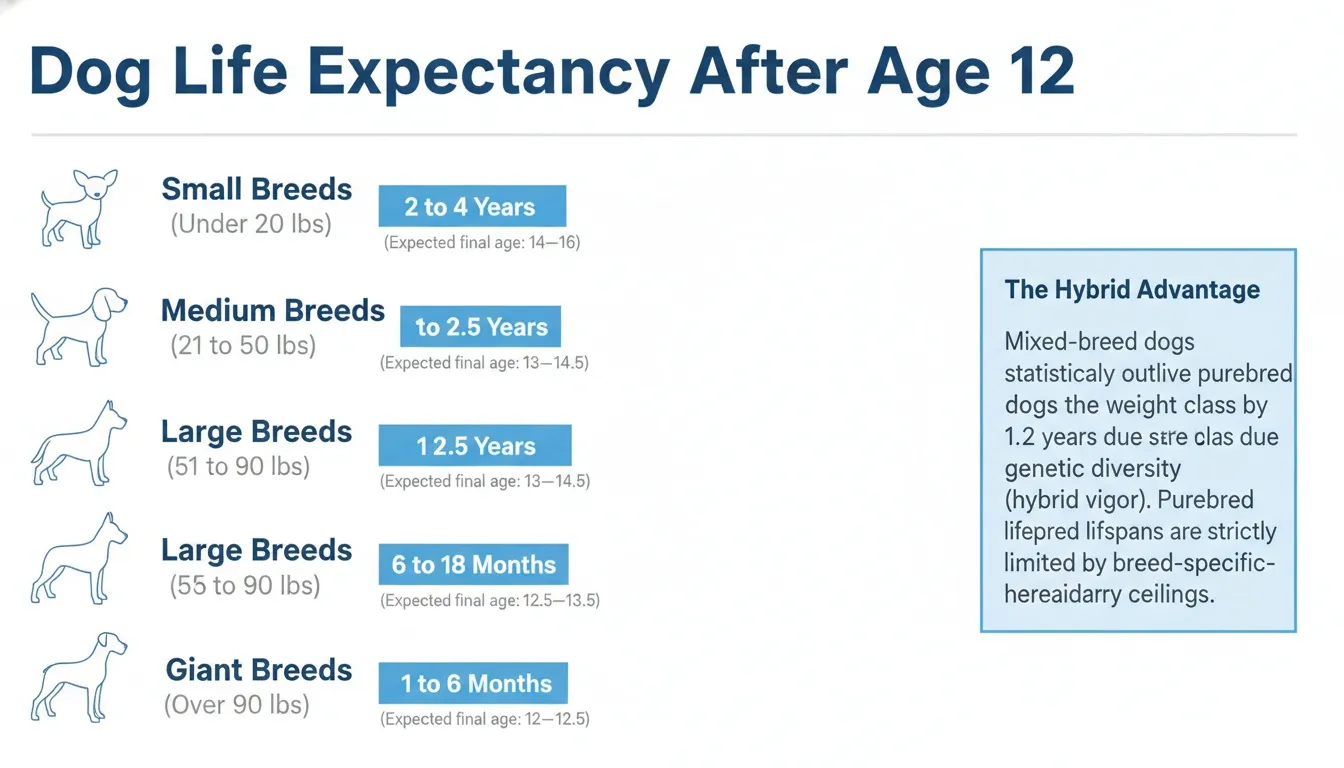
Data from veterinary lifespan studies details the typical remaining life expectancy for a dog that has already successfully reached age 12:
| Weight Category | Average Remaining Life Expectancy | Expected Final Age Milestone |
|---|---|---|
| Small Breeds (Under 20 lbs) | 2 to 4 years | 14 to 16 years old |
| Medium Breeds (21 to 50 lbs) | 1 to 2.5 years | 13 to 14.5 years old |
| Large Breeds (51 to 90 lbs) | 6 to 18 months | 12.5 to 13.5 years old |
| Giant Breeds (Over 90 lbs) | 1 to 6 months | 12 to 12.5 years old |
If you are caring for a large or giant breed who is already 12, every single month is a massive victory. If your companion is small, they may very well have a quarter of their life journey still ahead of them.
Mixed Breed vs. Purebred
Beyond physical size, your dog’s specific genetic background plays an essential role in determining their remaining timeline.
Mixed-Breed Dogs (The Hybrid Advantage): On average, mixed-breed dogs outlive purebred dogs of the same weight class by roughly 1.2 to 2 years. This phenomenon is driven by a biological concept known as heterosis or “hybrid vigor.” Because mixed-breed dogs have a highly diverse genetic pool, they are far less likely to inherit the doubled-up, recessive genetic defects that lead to early organ failure, specific cancers, or severe structural issues in purebred lines.
Purebred Dogs (Predictable Timelines): Purebred dogs carry a more rigid, predictable lifespan curve based on their specific breed history. While a purebred small dog like a Toy Poodle or a Jack Russell Terrier can easily push past 15, certain highly sought-after purebred lines carry known genetic ceiling points due to structural or hereditary health vulnerabilities.
Ultimately, these numbers are just statistical averages—your 12-year-old dog is an individual. By providing highly targeted senior nutrition, maintaining strict pain management, and keeping up with regular veterinary checks, you give them the absolute best statistical chance to beat the averages and stay by your side for as long as possible.
Frequently Asked Questions
Yes, across all breeds, a 12-year-old dog is biologically considered a senior or geriatric pet. For small breeds, this milestone represents entering their advanced elderly phase, while for large and giant breeds, reaching 12 is a rare and extraordinary achievement equivalent to an ultra-elderly human centenarian.
You should feed your 12-year-old dog a highly digestible senior formula tailored to their current weight trend, containing high-quality proteins, low phosphorus levels, and anti-inflammatory Omega-3 fatty acids. For a full breakdown of specific dietary adjustments, caloric balances, and structural requirements for older pets, check out our Complete Care Guide for a 12-Year-Old Dog section above.
A 12-year-old dog should transition to a comprehensive medical wellness schedule every 6 months to catch rapidly progressing health changes early, as detailed in our comprehensive Complete Care Guide above.
Yes, extensive veterinary data indicates that spayed and neutered dogs generally live noticeably longer than intact dogs. Altering a pet eliminates or drastically reduces the biological risk of reproductive cancers—such as ovarian, uterine, and testicular tumors—while completely preventing pyometra, a life-threatening uterine infection that is highly common and dangerous in elderly intact female dogs.
It depends heavily on their size and overall health, but small breeds under 20 pounds can frequently live another 2 to 4 years if their chronic conditions are managed well. However, for large or giant breeds, their biological timeline is much shorter, making every month past their twelfth birthday a precious victory.
While a general physical slowing down and increased sleep are normal parts of aging, distinct symptoms like aimless pacing at night, staring blankly at walls, or getting trapped in familiar corners point to a cognitive decline. If your companion is displaying these specific spatial and memory issues, it is highly likely a sign of Canine Cognitive Dysfunction Syndrome (CCDS) rather than standard aging.
Yes, brachycephalic (flat-faced) breeds like Pugs and French Bulldogs carry a much heavier biological wear-and-tear load by age 12 due to a lifetime of respiratory strain. Even though they are physically small or medium, their compressed airways make their internal organs work twice as hard, pushing their cellular age closer to a large breed than a typical small dog.
Yes, a lifetime of intense physical labor or high-impact athletic work changes how a dog’s body holds up at 12 years old. While their cardiovascular health and muscle memory often remain remarkably strong, their joints, ligaments, and spine typically bear extensive structural degradation and severe arthritis from years of repetitive stress, requiring a highly focused, aggressive pain management approach in retirement
🐾 Other Age Guides

Gulfam Haider Mehdi
Founder & Developer
I built Dogagescalculator.com to give dog owners honest, science-backed answers instead of the outdated "×7" myth. Every figure here is checked against AKC, AVMA, and published veterinary research.
More about the author & this site →📌 Featured Guides
what is the life span of a pit bull
→
What Is 13 Dog Years in Human Years
→
What Is 5 Dog Years in Human Years
→
yorkie mix breeds
→
Cavalier King Charles Spaniel and Bichon Frise Mix
→
Dog Age in Months to Human Years
→
cavapoo cuts
→
27 years in dog years
→
What Is the Lifespan of a Labrador Retriever
→
how much to feed a french bulldog puppy
→
Comments